
My Favorite Homeschool Math Curriculum – Review of CLE Math (Christian Light Education Math)

Math is one of those subjects that can cause quite a bit of stress for the homeschool mom. We know that our children need to make steady, developmentally-appropriate progress each year. But sometimes, finding math resources that fit our kids (and us) best can be challenging!
I’ve tried various math curricula over the years, but my all-time favorite is Christian Light Education (CLE) Math. CLE Math offers simplicity, effectiveness, and flexibility, and has been a staple in our homeschool for 11+ years! Today I’m sharing a full review of how we’ve used Christian Light Education Math over the years, my favorite features, and tips to consider if you’re thinking of switching.

Disclosure: *This post may include affiliate links. As an affiliate, I earn from qualifying purchases.
Read the disclosures and terms for more information.
(This is a post sponsored by Christian Light Education. All opinions are my own. Plus… I’ve already been using and recommending CLE for years. 😉)
What's Covered:
What is Christian Light Education Math?
Christian Light Education Math is a comprehensive, Bible-based math curriculum designed for grades 1-12. (They also have a Kinder level curriculum that incorporates math, but there isn’t a separate math curriculum for that grade.)
Christian Light Education Math Features
If you’re looking for the Cliff’s Notes to this review, here it is! CLE Math:
- Builds a strong mathematical foundation
- Incorporates Christian values
- Simple and effective design, without distracting colors
- Introduces new concepts in bite-sized, incremental steps
- Uses a spiral approach for continuous review
- Uses a spiral incremental approach,
- Structured into LightUnits, which are small, manageable booklets that prevent overwhelm and gives kids easy milestones to achieve.
I recommend it!
We have been using Christian Light Eduction Math since my oldest (now 16) was in first grade. I discovered CLE Math at our homeschool conference here in Oregon. The price caught my attention at first, because it was a frugal option compared to many of the others I was looking at. I also liked the looks of the LightUnits that seemed manageable for both my son and I. So I bought level 1 and gave it a shot! I’m so glad I did.
How Does Christian Light Education Math Work?
As I said earlier, Christian Light Education has math curriculum for grades 1-12. Each grade level has 170 lessons, including quizzes and tests.
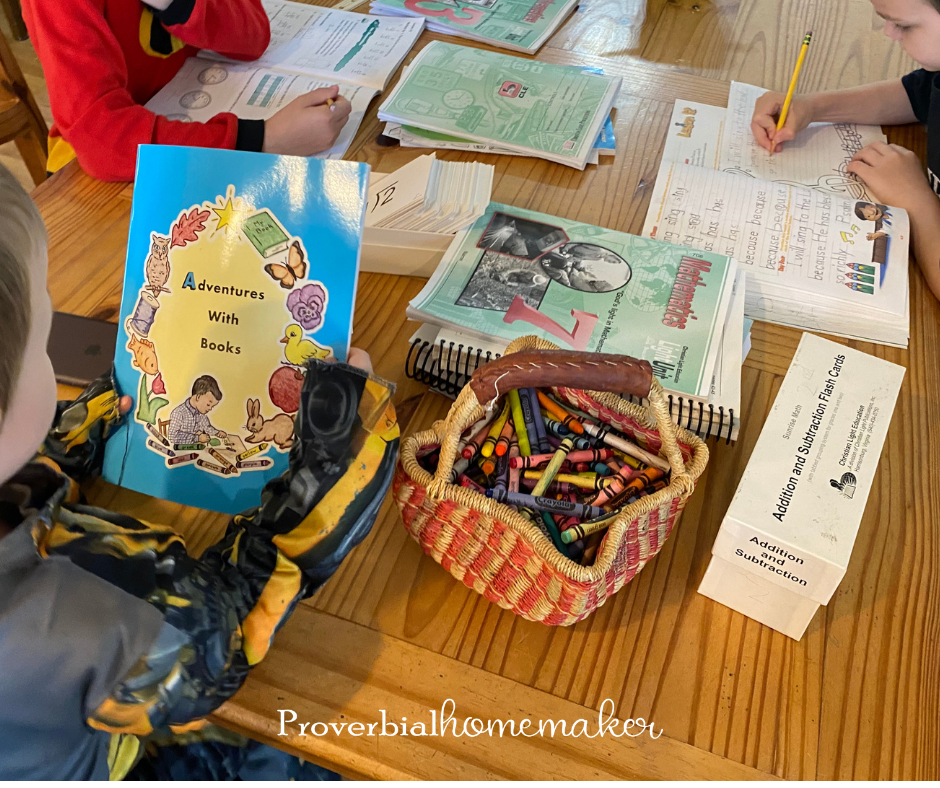
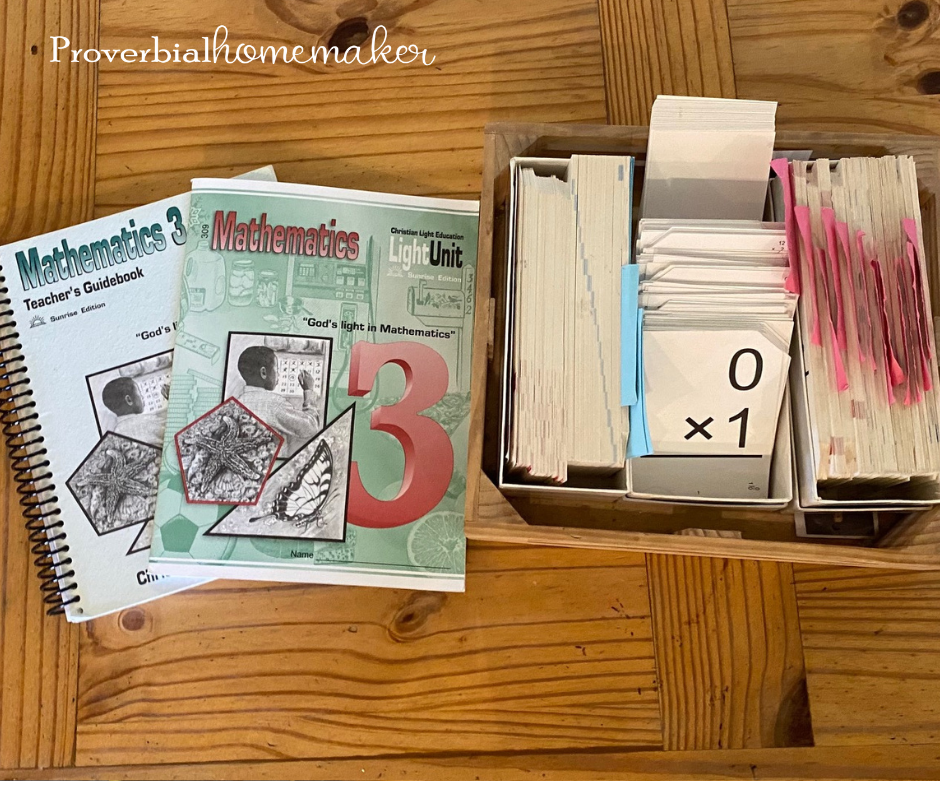
- Every CLE Math level uses their “Sunrise Math” format that includes a teacher manual and 10 workbooks (LightUnits) that the children work through.
- There are two quizzes — one at lesson 5 and one at lesson 10. My kids enjoy these and the “just for fun” activities that accompany them.
- A final test at the end of each LightUnit helps evaluate their progress.
- If needed, there are alternative tests in the teacher manual, as well as extra practice sheets for the skills covered in that level.
A Typical CLE Math Lesson
CLE Math is very open-and-go, which is a big win for this busy mamma. No prep work is needed, other than on occasion in the early years when you might want to grab some items from around the house for manipulative.
Each day, here are the steps we go through to complete a math lesson:
- Correct and review last lesson: CLE doesn’t dictate this, but it’s what we do so I keep up with correcting. Once my kid is able to, I let them compare the last lesson to the teacher manual and circle what they got wrong, then they come show me and work through those problems before moving onto the next lesson. Once they hit high school they review and correct on their own. I only correct tests.
- Review flash cards (for grades 1 – 4): This daily flash card review really helps solidify math facts. The more consistent we were, the better they mastered those facts! Prompts at the beginning of each LightUnit lesson tell the child what to review with their flash cards that day.
- Complete math facts speed drills (for grades 1-5): The speed drills are helpful for truly mastering and making sure they weren’t relying on counting. Most of my kids enjoy this and like seeing their progress as they chart their results. Others are overly stressed by it, so we remove the timed aspect and they do just great.
- Learn new skill/concept: This is done in a bite-sized lesson each day and includes everything they need to learn that concept well. The teacher guide may include helpful tips and, for early grades, suggestions for hands-on manipulative to use.
- Complete the We Remember section: The rest of the day’s lesson is the review section. Over the course of the level, this section will spiral through all the skills and concepts they’ve learned so far for gentle review.
Notes on Specific Levels
Over the years, I’ve learned some things about the different math levels/grades for CLE math that may be helpful for you to keep in mind as you plan for or work through them.
1st Grade CLE Math – I really love CLE for first grade math. It includes a counting book, laminated counting chart, and addition and subtraction flash cards that you’ll use through level 4. Until your child is reading fluently on their own, you’ll be doing their math along with them. Depending on when your child takes off with reading, math becomes more independent in 2nd/3rd grade. 1st grade also has an optional Calendar book and student clock which my kids LOVE, so I recommend using them!
3rd Grade CLE Math – Around 3rd/4th, kids may feel challenged by the increased difficulty of the lessons. Slowing down as needed, as well as doing math year-round, has been the best strategy for us. You can slow down by covering a lesson over two days and just generally making sure they understand the concept before moving on.
7th/8th Grade CLE Math – Pre-algebra content is split across 7th and 8th grade, along with other concepts. 8th also includes more family business and consumer math. I’ve heard some families choose to use a different program for pre-algebra and then move on to 9th grade CLE, but my oldest did both 7th and 8th with CLE Math and it really set him up for success in Algebra. The 8th grade level consumer math was valuable for him, too!
9th – 12th Grade CLE Math – 9th and 11th grade are Algebra 1 and 2, respectively. My oldest really liked Algebra 1 and did well with it on his own, so he plans to do CLE Algebra 2 in 11th. As of this writing, 10th grade Geometry has not yet been updated to the Sunrise format we know and love. (Originally CLE math used a different format for math, from the AOP curriculum, that we have heard isn’t as user-friendly as CLE’s updated version.) So, we used a different program for Geometry and will come back to CLE for Algebra 2.

Why Christian Light Education Math is My Favorite
Christian Light Education isn’t the only math curriculum we’ve used. In a few instances, we dabbled with other curricula but came back to CLE. But I also have a couple of kids who currently use other math programs for various reasons (see FAQ below). Still, CLE remains my personal favorite math resource for its effectiveness and flexibility. Its the one I recommend most often!
1. Simple and Effective Design
The design of CLE Math is straightforward and no-nonsense. The simplicity of the layout minimizes distractions, which helps children focus on the task at hand. (This is particularly important for a couple of my kids.)
We also really like the format of the LightUnits. Instead of having everything in one long textbook that seems to never end, kids work on one small workbook at a time. The workbook has a little story at the beginning that the story problems may refer to later. It’s also broken up into milestones with a quiz at lesson 5 and 10 and a test at the end. I’ve noticed that we find this setup motivating and easy-to-use!
2. Bite-Size, Incremental Lessons that Help with Mastery and Prevent Overwhelm
Each LightUnit focuses on specific concepts, allowing students to thoroughly understand each topic before progressing. The new content is short and to-the-point, with good instruction so that independent learners can move through it themselves. My children appreciate these manageable chunks and they are better able to grasp the concepts at their own pace.
3. Systematic Daily Review
The systematic daily review is what makes CLE a “spiral” approach to math instruction. Daily review in the “We Remember” section goes over previous concepts taught, reinforcing what has been learned and ensuring that the material is retained. It really helps solidify their learning.
The review sections also is helpful for identifying areas that they need more work on or have forgotten the mechanics of. When that happens, we look up the skill/concept in the appendix to find out where it was taught and spend a little time reviewing it.
4. Helpful Additional Teaching Resources
The teaching tools available with CLE Math are incredibly helpful. When you’re a busy homeschool mom, this makes all the difference.
Charts, Tools, and Tips – For younger grades, there are charts, tools, and suggestions for around-the-house manipulative that make learning more engaging. For example, the calendar book, student clock, and counting book in 1st grade (can also be used in 2nd).
Teacher Manuals – The teacher manuals are essential and contain how-to-use info, teaching tips, and more helpful material. Obviously, they’re helpful for correcting assignments, which my kids eventually start to do on their own. But there are other pieces in the manuals that have been very helpful as well. Here are a few:
- Extra practice sheets – if your students get stuck on a concept or just need extra practice, review the instruction on that topic and then work through the extra practice sheets available.
- Alternative tests – occasionally, a student might do poorly enough on a test that they need to spend more time reviewing and take a whole new test. There are alternative tests in the manual for each LightUnit in that level.
- Skills list – sometimes a kiddo would struggle with a concept and neither of us could remember how the book taught it. Instead of flipping around the workbooks, one of the appendices in the back has a list of the concepts learned and what page to find them on in the manual. You can use that to go through the lesson with them again and get back on track.
Flash Cards – The flash card system is simple but effective and are used in grades 1-4. The more consistent we are with them in the daily lessons, the better the kids are at their math facts without needing other supplements!
Diagnostic Tests – If you’re not sure where to place your student in the CLE math program, use their diagnostic tests. You can download them for free, along with accompanying teacher manuals.
Reference Charts – These are math facts reference charts located in the back of the teacher manual and can be pulled out for use by you or your student. They also sell laminated versions of them. We’ve used them often!
Skill Development Worksheets – On at least two occasions, we have needed some extra help on certain concepts, usually on fractions. CLE has Skill Development Worksheets available for purchase that cover Geometry, Fractions Ratios and Proportions, and Algebra.

5. Flexible to Fit a Child’s Pacing and Needs
Every child learns at a different pace, and CLE Math accommodates this beautifully. The curriculum is designed to be flexible, allowing students to move through the material at a speed that suits them.
Need more time to grasp a concept?
- Slow down and cover a lesson over two days.
- Use the extra practice sheets in the teacher manual.
- Look up and review past concepts if they forget or get stuck.
Ready to move quicker?
- Cross off repetitive review problems and do two lessons a day.
- Skip the quizzes and “just for fun” lesson (but make sure you’re correcting the lessons)
- If you’re moving into a new level, you may be able to skip the first LightUnit because they are often review of the last level. For example, you may be able to skip 201 and move right to 202. Check the scope and sequence for that level on the CLE web site if you’re not sure.
Need more help with concept areas or math facts?
- Make a habit of using the math facts flash cards.
- Let them use the reference sheets for math facts help and they’ll often memorize over time naturally.
- Try the extra practice sheets in the teacher manual or the Skill Development Worksheets they offer.

FAQ About Christian Light Education Math
How Does CLE Compare to Other Curriculum? Is It Advanced?
Many fans of CLE Math confirm that it is a very thorough curriculum that is considered advanced compared to some others. The truth is, every math curriculum has its own pacing and may introduce things at different times. For example, one curriculum may seem “ahead” of others in the early years, but even out by the time they get to high school. I think it’s more important to find a curriculum that works well for your kids AND for you, and making steady progress year over year.
Which CLE Math Level Should My Child Start With?
That said, if you’re coming over from another curriculum, definitely take the diagnostic test. You may find that they place in a level lower than anticipated, but you can use my points above for speeding up the pace, if needed. Remember, that the most important thing is for them to go at the pace best suited for them! There will be time to “catch up” later if you find it necessary.
(I really mean this, dear stressed out homeschool mom of elementary kids. I have had kids “ahead” in math and kids “behind” by a whole year. You have time to make small adjustments as needed so that, by high school, they are where they need to be… which can vary depending on the kid.)
Do you use Christian Light Education Math for all your kids?
All of my kids have used Christian Light Education Math at some point. There have been times we’ve dabbled with other curricula and come back to CLE. I also have a few students who ended up with a different program, but I’m still glad they started out with CLE Math. For example, I have a boy with dyslexia and dyscalculia who is close in age to his younger brother and started off doing the same level of CLE math as him. At one point it became a significant discouragement for him to see his brother outpacing him. We ended up moving him to a different resource and it’s going well for both of them!
Are the Teacher Manuals Necessary?
Yes, you’ll want the teacher manuals because they provide quick reference to all the concepts in the level, the correction pages, tips for teaching, and more!
Can I Try Out CLE Math Before Purchasing?
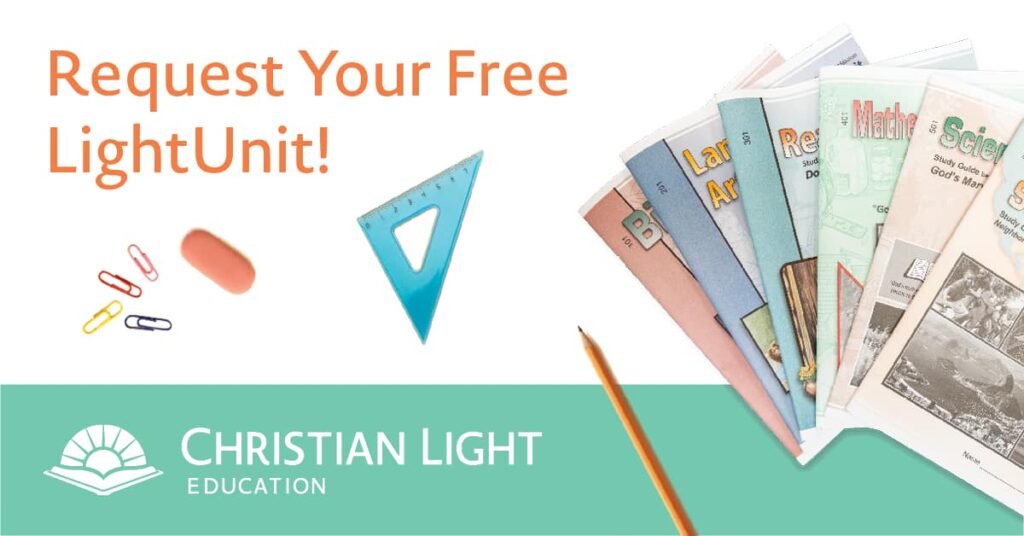
Yes! Each teacher manual and LightUnit has a sample to preview on their web site. After doing the diagnostic exam, you can also request a FREE LightUnit to try out with your child!
—
I hope this was a helpful review for you! Feel free to ask questions here in the comments and I’ll do my best to answer. Or you can contact the publisher directly! And you’ll also want to watch the video below for a flip-through of the curriculum (click here to skip to that part specifically).
Happy homeschooling!
~ Tauna
You Might Also Like…
Learning Styles and How to Teach to Each One in Your Homeschool





Hi! I’m debating switching my first grader from Singapore to this program. He’s getting so frustrated by number bonds he’s not wanting to do any math. You mentioned letting them use reference sheets for the math facts. Are there reference sheets for first graders? I’m not seeing any on their site. Thanks for the review!
Hello! The reference sheets start in grade 2 and up. There is a
What did you use for Geometry?
We used Denison.
Is there a video component like Denison or Math-U-See? Or are any new concepts left for the student to learn on his own from the book?
Hello! There are no video elements with CLE Math. We find the instructions so clear that it isn’t necessary.
Hi! This is encouraging and helpful. Thanks! So I have a a 6 and 7 year old that are both in level one Math in different light units. I’m trying to figure out how to organize flash cards. I think I basically need another set correct? Because of the way they organize them as you go. Also I’m curious how much time you spend doing math? It seems to be taking us pretty long to complete the lessons, but maybe cause we’re getting used to it? Thanks
I did get a second set so I had one for each kid but they were a couple levels apart. I would try using just the one set and do the review with them both each day. It’s ok if one of the kids gets more review than they technically need. 🙂 As far as how long… that varies. I skip quizzes and we also skip the first workbook for each new level because it’s a review of the past level (for kids who didn’t do school all summer… but we do math year-round). If they don’t need as many review problems, I cross out up to half. If they need to slow down we just do half a lesson a day. Overall it works out to a level a year so I don’t sweat it too much and just go at their pace! 🙂
What other math program worked well for your child with dyslexia? I’m afraid to have kids on different programs, but I might need to for the same reason!
Math U See works pretty well for two of them.