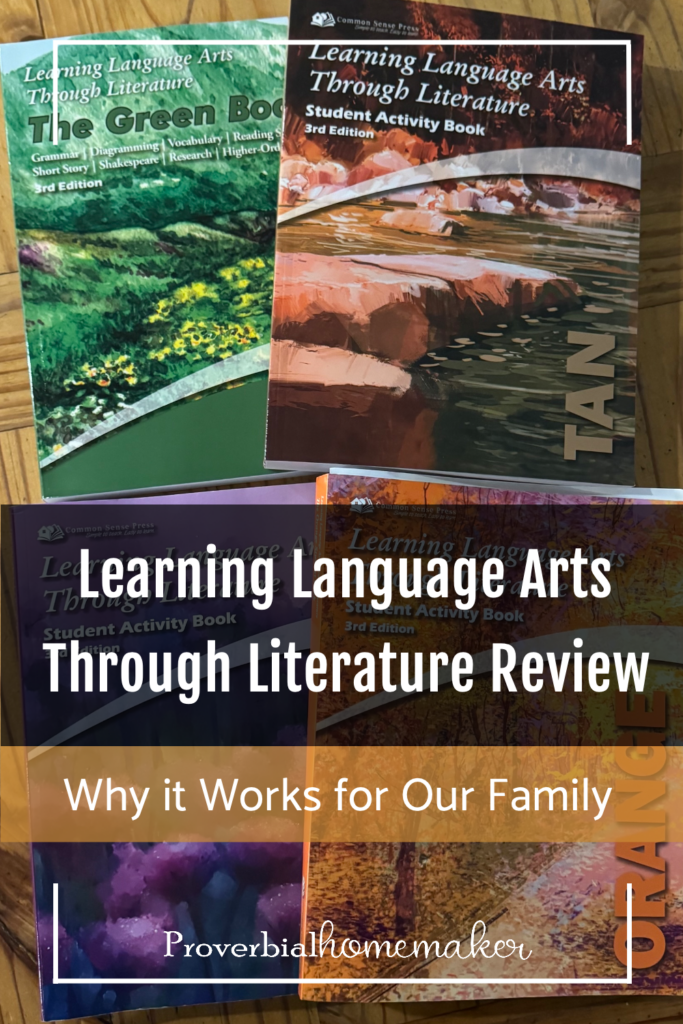
Learning Language Arts Through Literature Review: Why it Works for Our Family

Language arts has been one of the more difficult subjects to settle on in our homeschool. Generally, I like to use elements of the Charlotte Mason approach such as good books, copywork, dictation, narration, etc. It has served us well for many years! But I also know myself well, and the truth is that I often need a little help to make sure I’m consistently teaching spelling, grammar, and writing skills along the way.
Disclosure: *This post may include affiliate links. As an affiliate, I earn from qualifying purchases. Read the disclosures and terms for more information.
Disclosure: Sponsored post. I asked to use LLATL in our homeschool and provide a review.
After 15 years of homeschooling, I’ve finally found an all-in-one language arts curriculum I actually like: Learning Language Arts Through Literature (LLATL)! This curriculum provides the best blend I’ve found of literature-rich learning, CM-inspired methods, and practical, organized instruction.
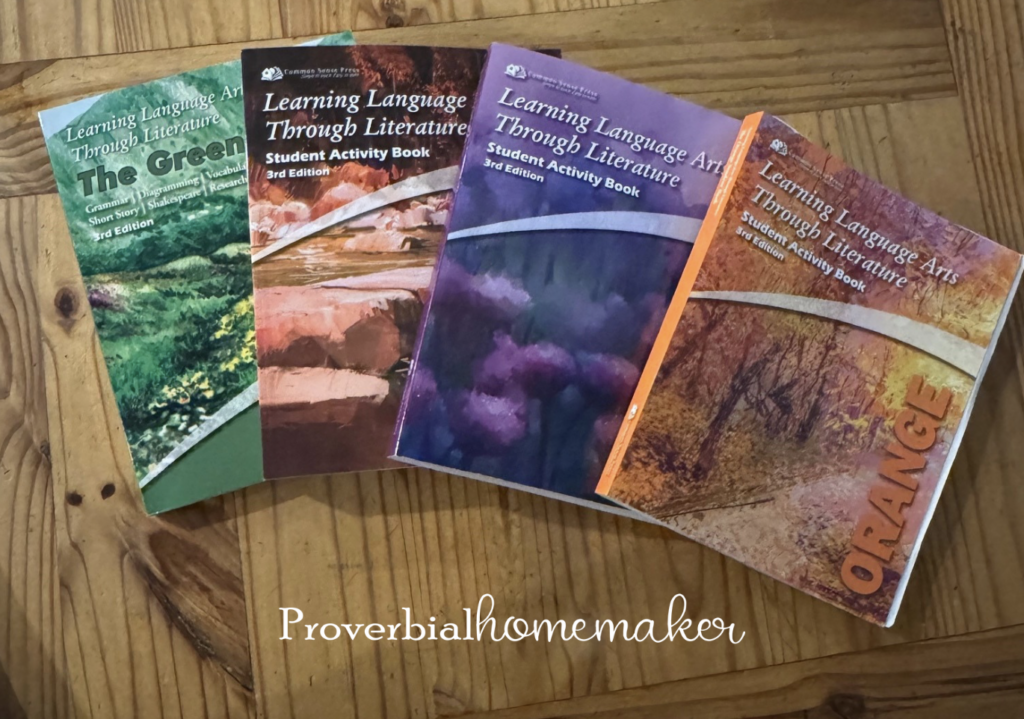
So far this year, we’ve been using the Green, Purple, and Orange Books. We plan to use the Tan Book as well for one of my kids who is quickly moving through his current Purple Book level. My two high schoolers are also using the Gold Books, but I’m saving those for a separate review after we’ve spent a few more months with them.
Today I’m going to share all the details with you so you can see if it’s a good fit for your homeschool as well!
What's Covered:
What Is Learning Language Arts Through Literature?
LLATL is a complete language arts program from Common Sense Press. It includes levels all the way from first grade through high school. In the elementary and middle school levels, it brings reading, literature, spelling, vocabulary, grammar, writing, and other language arts skills together in daily lessons.
Instead of teaching every skill in a separate book, LLATL often teaches those skills in the context of a literature passage, a writing assignment, or a book study. The first through eighth grade levels are arranged for a 36-week school year and use both a Teacher’s Book and a Student Activity Book. You definitely want to get the Teacher’s Book, btw. You’ll definitely need it, so don’t forget to order it along with your Student Book!
LLATL has a level for each grade from first through eighth. Here’s a quick look at the levels include:
- Blue Book (1st grade): Beginning reading with systematic phonics, readers, and read-alouds, handwriting, spelling, grammar, and hands-on activities.
- Red Book (2nd grade): Continued phonics and reading practice with six readers, read-alouds, handwriting, spelling, grammar, and creative writing.
- Yellow Book (3rd grade): Copywork or dictation from literature, spelling and grammar, beginning cursive, journaling, and four Literature Links for reading and discussion.
- Orange Book (4th grade): Book studies and dictation, with units on research, journal writing, poetry, newspaper writing, and writing and binding a storybook.
- Purple Book (5th grade): Book studies and dictation, poetry, speechmaking, and oral presentations.
- Tan Book (6th grade): Book studies, dictation, prefixes and suffixes, library skills, and a research paper unit.
- Green Book (7th grade): Book studies, poetry, short story writing, research, and more advanced grammar and composition.
- Gray Book (8th grade): Book studies, dictation, vocabulary and word roots, and a five-week writing unit that prepares students for high school writing and research.
That variety and skill coverage is a huge part of the appeal for me. My children are learning the nuts and bolts of language arts, putting their skills to practical use, AND exploring forms of composition I might skip over a bit too easily. (Sorry about that, poetry.)
Why LLATL Works So Well for Our Family
I have children with a wide range of needs and abilities. Some are a little advanced in certain areas, some are right around average, and some have challenges like dyslexia, language processing, and working memory challenges.
LLATL has been easy for me to adapt. If a child needs more support with reading, we can read together. If dictation is too much on a particular day, I can shorten the passage or use it as copywork instead (still so valuable!). Sometimes I have the struggling ones give oral answers if they’ve been doing a lot of writing that day already in general. And of course, a child who’s able to work more independently can easily do so.
The size of the lessons is also great. I can see that they are making good progress with each lesson, but they don’t too long. Common Sense Press says most lessons generally take 20–30 minutes or less. That’s been about right for us. Some of the kids can get it done even quicker than that, depending on the lesson.
Literature, Dictation, and Language Arts in Context
The literature selections were one of the first things I looked at, and so far I’ve liked all the books for the levels we’ve used. The book studies give my kids real stories to read and discuss, with opportunities to work on comprehension, vocabulary, and writing related to those stories.
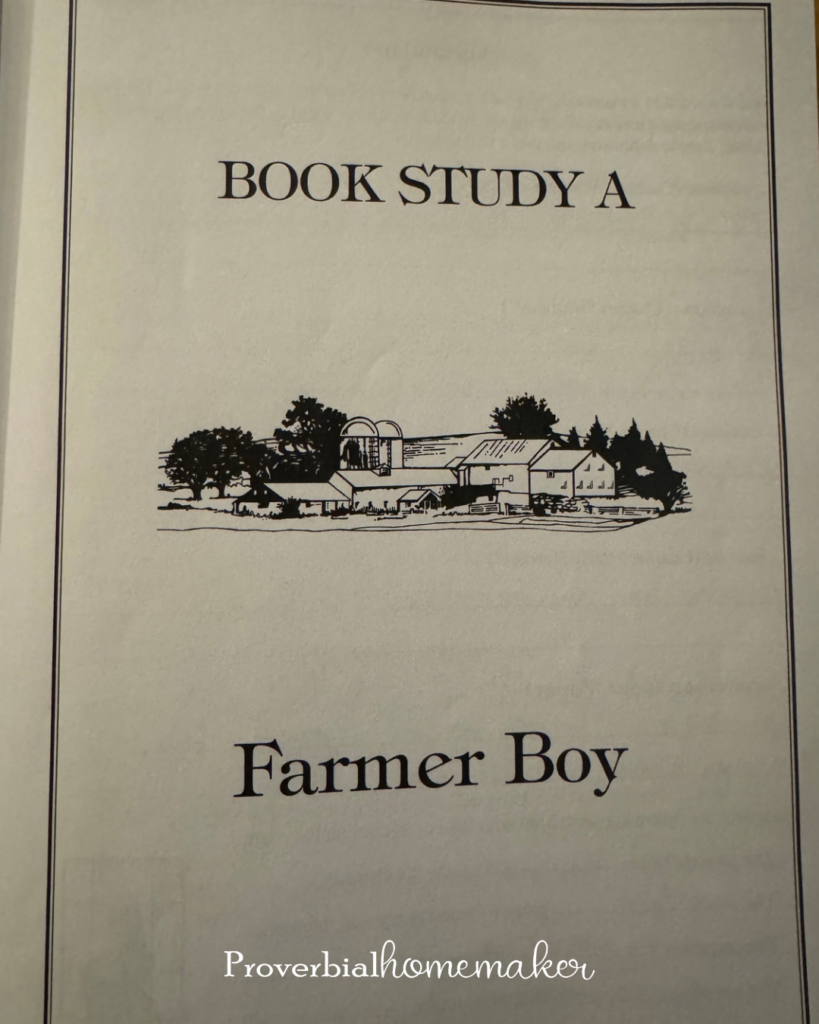
Some of the selections include The Boxcar Children and The Sign of the Beaver in Orange; Farmer Boy, The Trumpet of the Swan, Number the Stars, and Caddie Woodlawn in Purple; and The Star of Light, The Mysterious Benedict Society, and Much Ado About Nothing in Green. The kids will enjoy other literature selections through family read-alouds and other subjects, but I like knowing each of them will dig into these books in their LLATL lessons.
Homeschoolers like me who use a lot of the Charlotte Mason methods will find LLATL easy to use and a great way to make sure those fantastic habits happen consistently. We use narration (written and later oral), copywork, and dictation most often. They also get gentle grammar and spelling instruction.
Is LLATL Too Gentle or Too Simple?
First of all, I should mention that for my oldest I used no formal writing program (just reading, narration, copywork, and dictation) until he was in the middle of the 8th grade. We didn’t even do any grammar until then! (gasp) Some people would call that “light,” and yet it worked very well and he is an excellent writer.
Now, LLATL in elementary and middle school is more structured than that, but it’s still not what you’d see in a more traditional setup with all the subjects very formal, separate, and worksheet-based. So, someone flipping through might think “that’s not enough” because it doesn’t look like more rigid/traditional or separate-subject curriculum options. But I think it’s just the right amount and pulls everything together beautifully.
Will I supplement for struggling spellers who are older? Yes.
Will I add more to the reading list, especially for for my avid reader? Sure will! We’re big into books, here.
Will LLATL still serve well as our LA spine and produce competent writers, readers, and speakers? Absolutely.
If you want to take a closer look, common Sense Press provides sample lessons, scope and sequence information, and skills assessments to help parents choose and evaluate a level.
Does Learning Language Arts Through Literature Need Supplements?
With Language Arts curriculum, I think it’s important to give it a good run before deciding whether to supplement with something else. The same is true for LLATL. It’s easy to bring home a new curriculum, notice that it doesn’t teach a certain skill in the first few months, and immediately add another program. But curricula introduce and revisit skills in different ways and in different orders. Sometimes we need to give the process time to work.
On the other hand, we also need to know our children. I’m not going to wait an entire school year to address a specific struggle I can already see clearly in an older child’s writing or reading. Sometimes, especially for older children, we already know we need something extra. But that’s the balance I try to keep: give the curriculum a chance, adapting it appropriately to their needs, but make changes when your child’s work shows you they need them.
For one student, LLATL may be plenty on its own. Another may need targeted spelling instruction, more writing practice, or demand more on their reading list (I have one of those – it sounds like a dream come true but it’s a challenge to keep up lol).
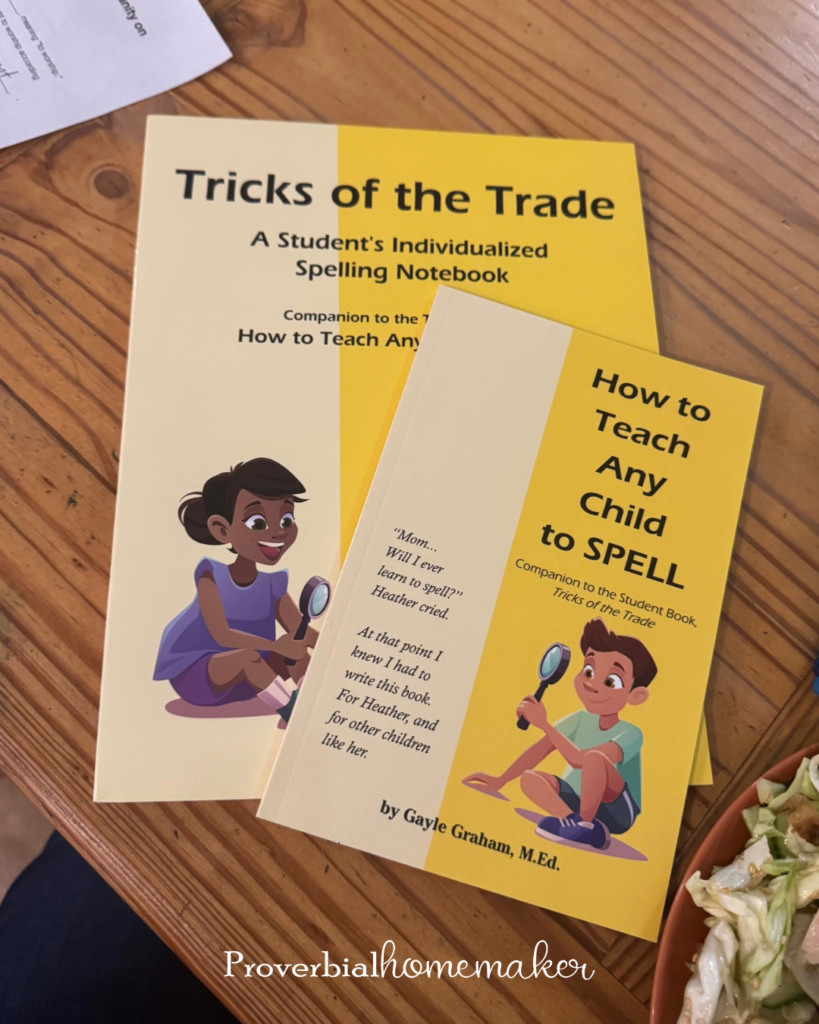
A Spelling Resource We’re Adding
We’ve also started using Common Sense Press’s How to Teach Any Child to Spell and Spelling Tricks of the Trade. It caught my attention because it takes the child’s own misspelled words from their writing and uses them to build an individualized spelling notebook. Those are words the child is already trying to use and needs help learning.
I like how naturally that fits with LLATL, but it could also be used alongside another spelling program or on its own. For us, it’s one more way to make spelling practice relevant to each child instead of relying only on a list of words someone else chose.
Can Children Use LLATL Independently?
The younger levels require more teaching from a parent. As children get older, they can do more on their own, though I still think it’s valuable to discuss what they’re reading and look over their writing (and you’ll likely still do dictation with them).
To me, that’s a feature. LA curriculum that requires zero parent involvement has not served us well. The struggling kids need us and the advanced kids benefit from the deeper conversations or bigger challenges, so LA is not a hands-off subject for us. Also, if you have a reluctant reader, you can use audiobooks, read to them, or take turns reading chapters.
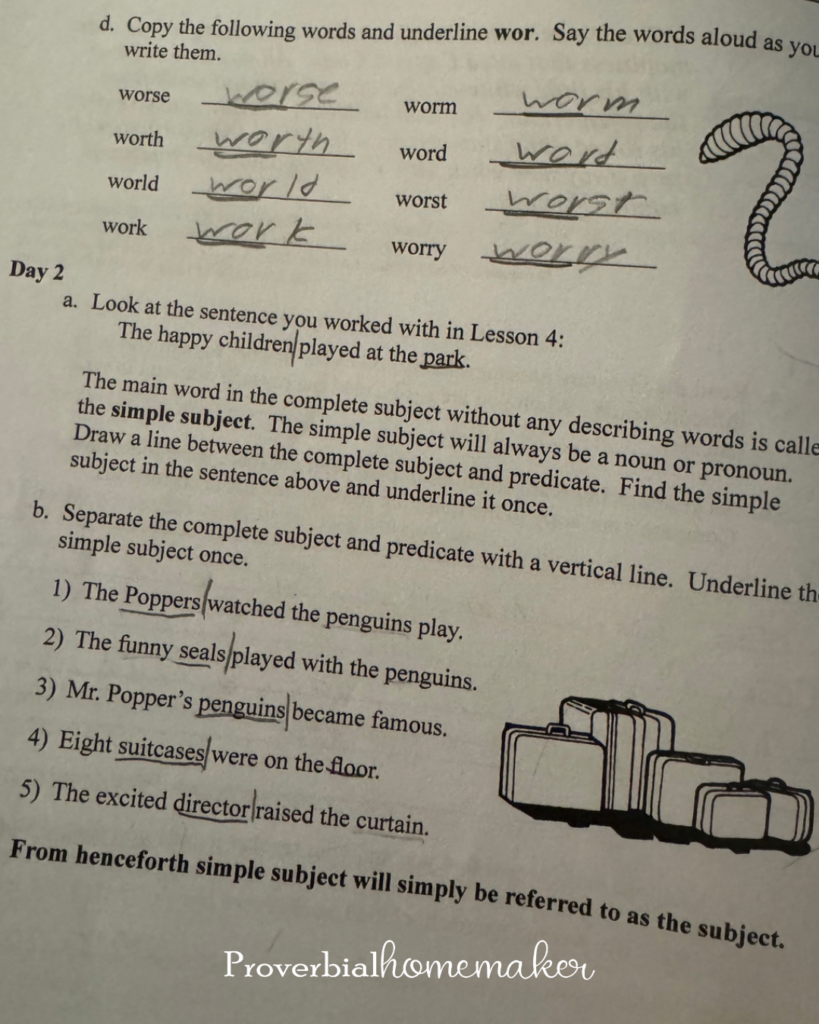
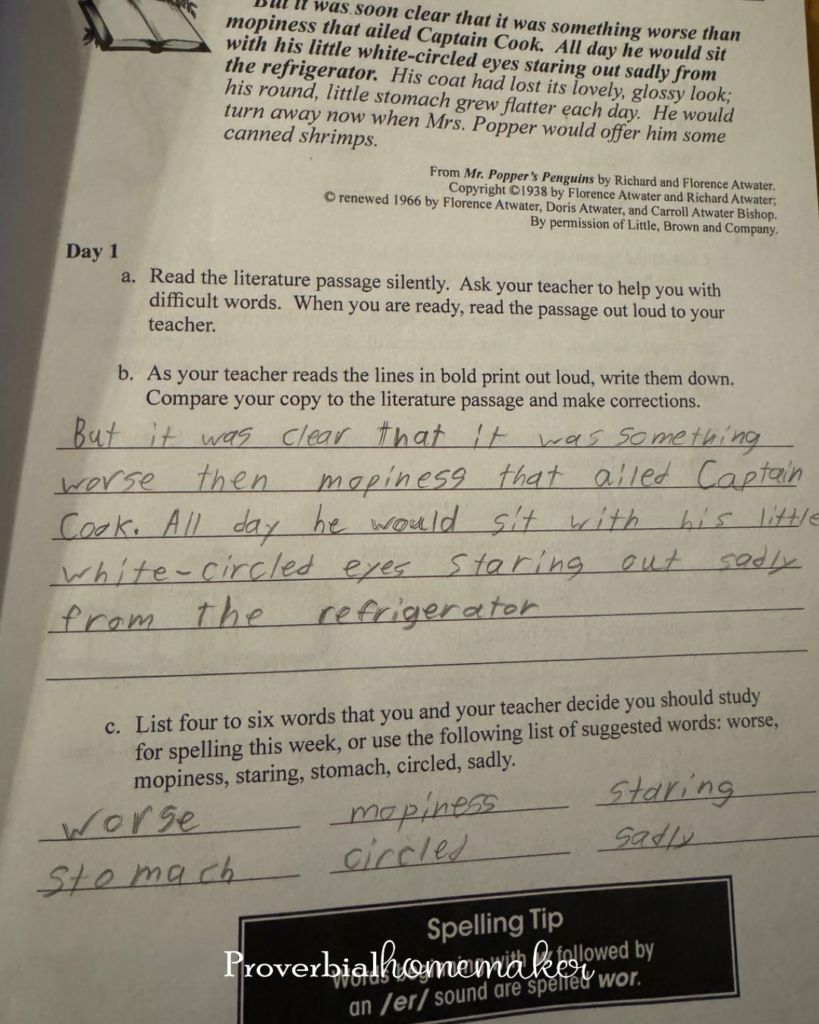
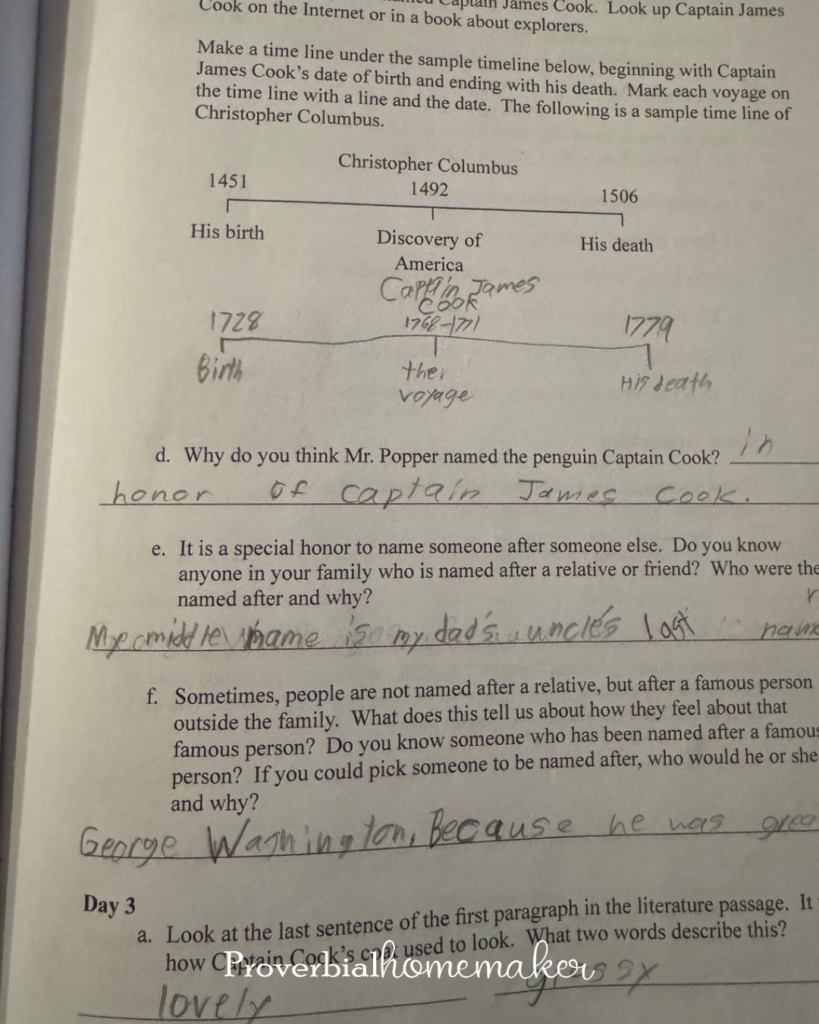
Here are a few photos of the inside. I included a few snapshots of the teacher pages, too, so you can see the margin notes. And the one with highlighter is how I use it with my youngest who has dyslexia and trouble writing: a yellow highlighter to help him with letter height.
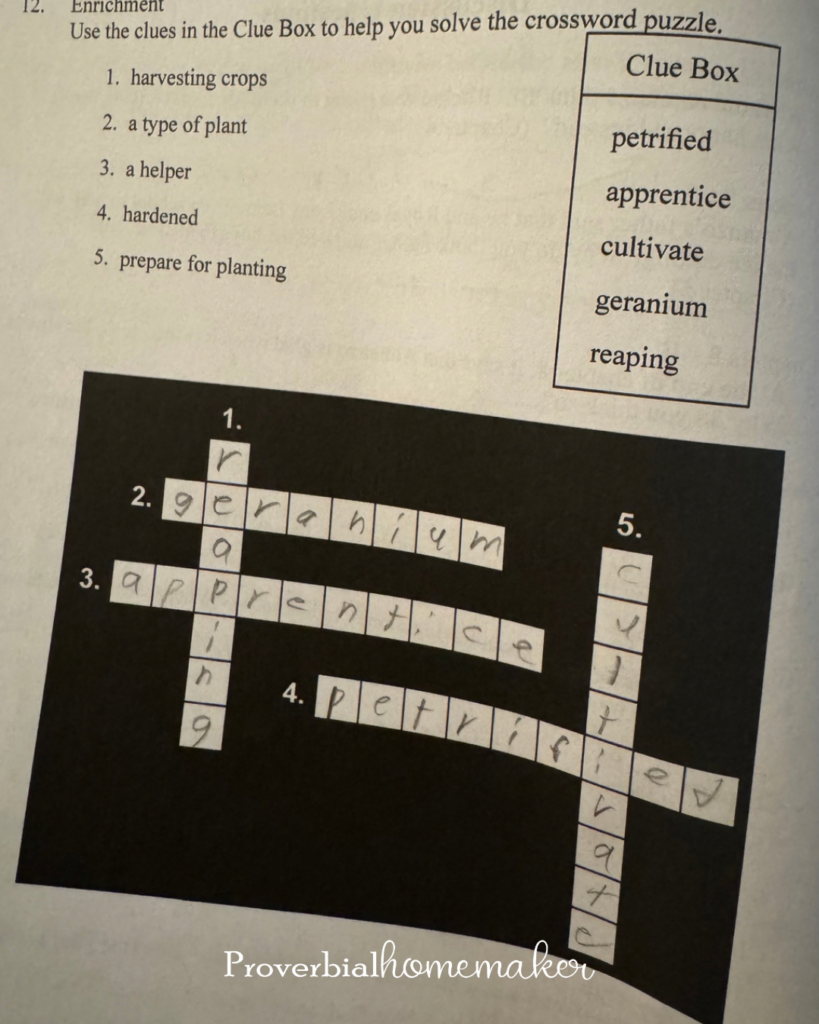
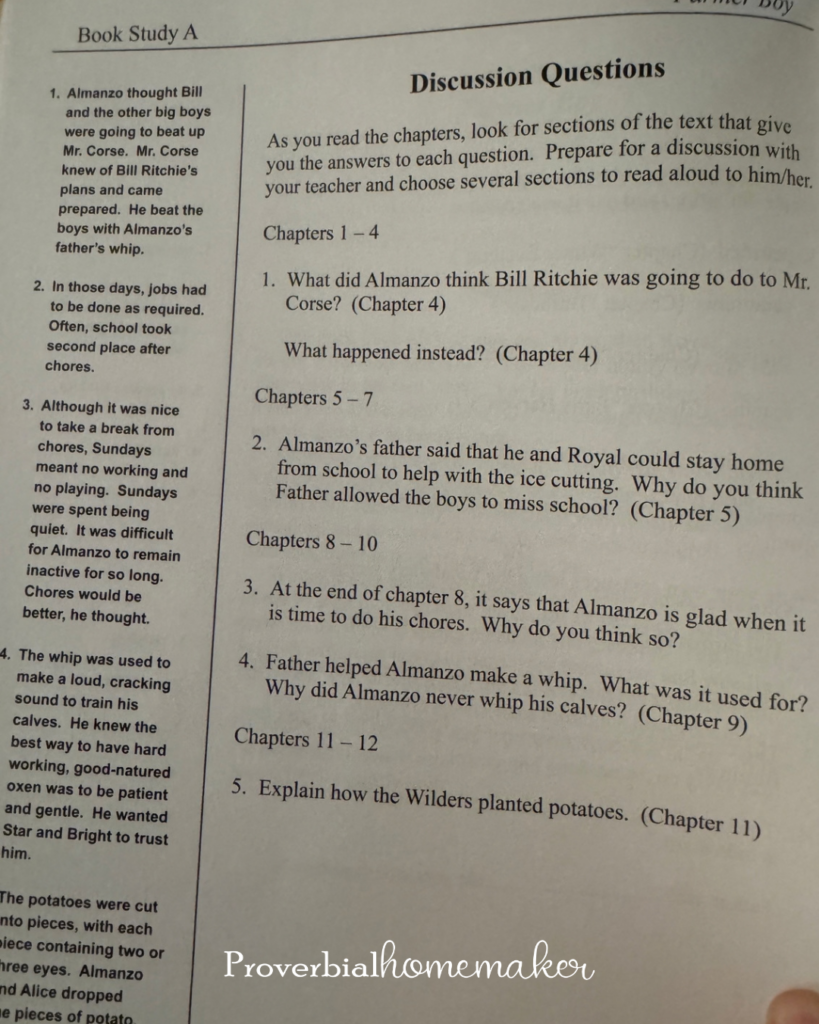
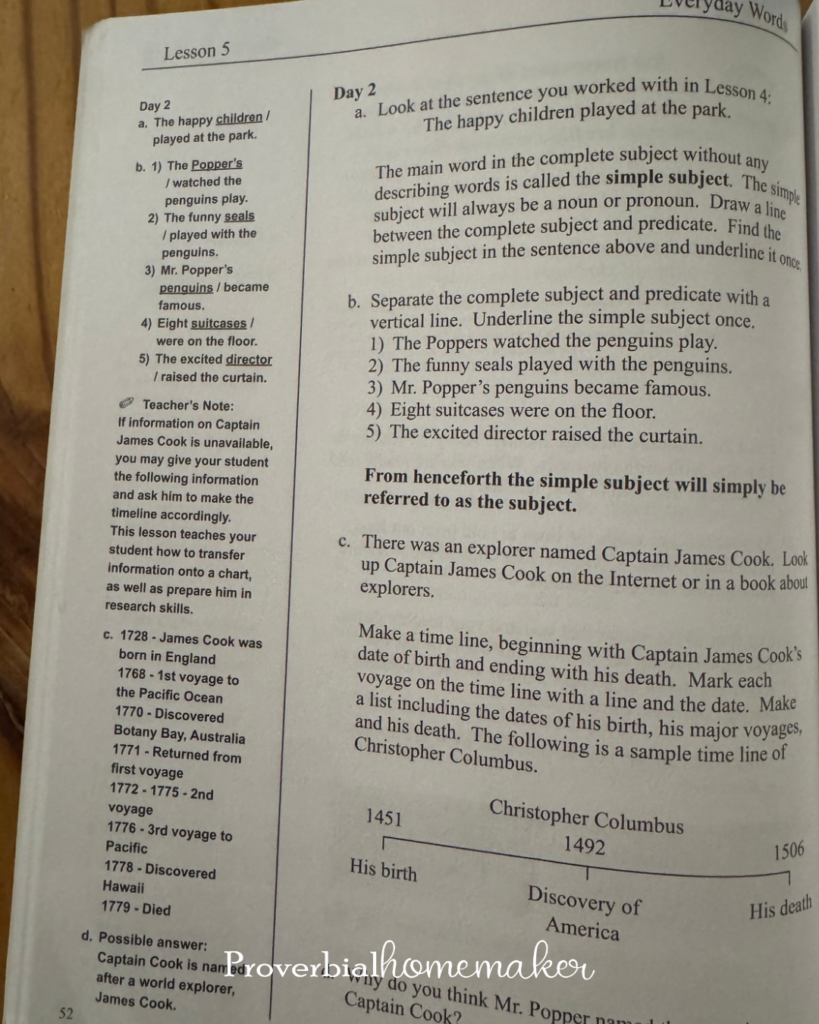
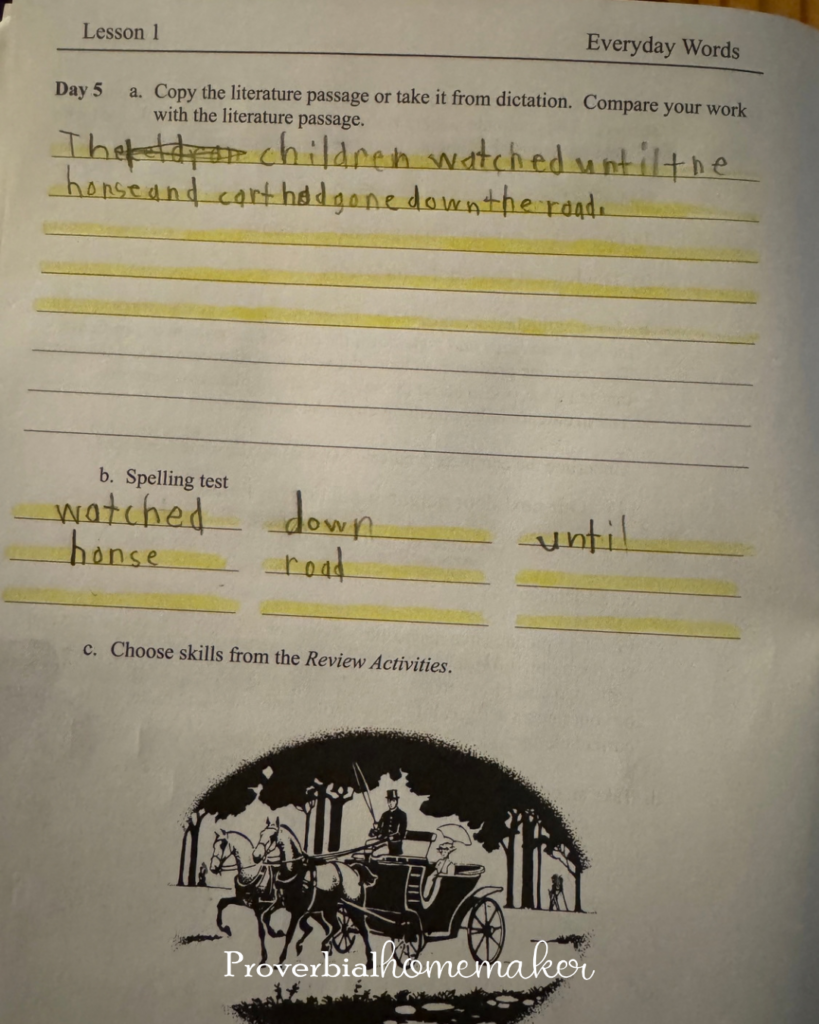
What About Dyslexia or Other Learning Challenges?
LLATL is not designed as a dyslexia program, per se. If your kid is dyslexic they’ll likely need supplementation or extra support. My dyslexic kids are reading fairly well now but I do help at times by reading aloud to them, companion reading, using audiobooks, adapting the writing portions for their level and how they’re doing that day, etc. It’s easy to adapt the daily work with LLATL.
Is LLATL a Christian Curriculum?
Yes, Common Sense Press is a Christian company and there is some Christian material in LLATL, including some passages drawn from Scripture, hymns, and Christian biographies. Of course, I like that aspect, but I bring our own biblical principle and worldview conversations into literature studies and composition assignments. When we read about a character’s choices, motives, courage, dishonesty, or treatment of others, I want to talk about those things with my kids.
What Would I Consider Before Buying?
If you’re considering LLATL, I’d keep these things in mind:
- Look at the level, not only the grade label. A child may be stronger in reading than spelling or writing. Use the publisher’s samples and skills information to see where they’ll be appropriately challenged.
- Plan on some parent involvement. Older children can do more independently, but discussion and feedback still matter, especially for writing and literature.
- Check which books you’ll need. The elementary and middle school levels use a Student Activity Book and a Teacher’s Book (don’t skip it).. The book studies also call for the selected literature, which are easy to find at the library.
- Watch your child’s writing over time. Their completed work will tell you much more about whether they need extra practice than the number of workbook pages in a lesson.
Bottom Line: I Recommend Learning Language Arts Through Literature!
Learning Language Arts Through Literature is the first complete language arts curriculum in 15 years of homeschooling that has really felt like a fit for me. It gives us the good books and CM methods I’m drawn to, along with the structure and direct teaching I find helpful to keep things moving forward.
I love that the lessons are a reasonable size, the literature selections are ones I’m glad to bring into our home, and I can adapt the work for children with very different strengths and challenges.
(Side note: This is the first curriculum my cousin, Tami, recommended to me when I started homeschooling. I wish I had listened to her and given it a try! But don’t tell her that. 😉 )
If you’re looking for an all-in-one language arts program that brings skills into the context of literature and writing, I think Learning Language Arts Through Literature is well worth a look. Start with the sample for your child’s level, give the approach time, and adjust where your child’s work shows you they need help.
You Might Also Like…
Our 2026-2027 Homeschool Curriculum Picks