12 Practical Ways to Prepare for a New Homeschool Year (Beyond Curriculum Planning)

Every summer, the back-to-homeschool lists begin making the rounds. Buy the curriculum. Order the pencils. Organize the schoolroom. Make the schedules.
Those things can be helpful. I do some of them, too.
But after homeschooling six children for many years, I’ve learned that the most important preparations aren’t always the most obvious ones. 😉
Disclosure: *This post may include affiliate links. As an affiliate, I earn from qualifying purchases. Read the disclosures and terms for more information.
Here are 12 things I do to get ready for a new homeschool year. Some are practical, some are a little unexpected, and all of them help us begin with greater purpose and peace.
1. Pray
This is the most important preparation I make. I learned a long time ago that prayer is essential, and I need the Lord’s wisdom and guidance every step of the way. Without it, things don’t go well. :/ Unfortunately, it’s also the easiest one to rush past when there are books to order and plans to finish.
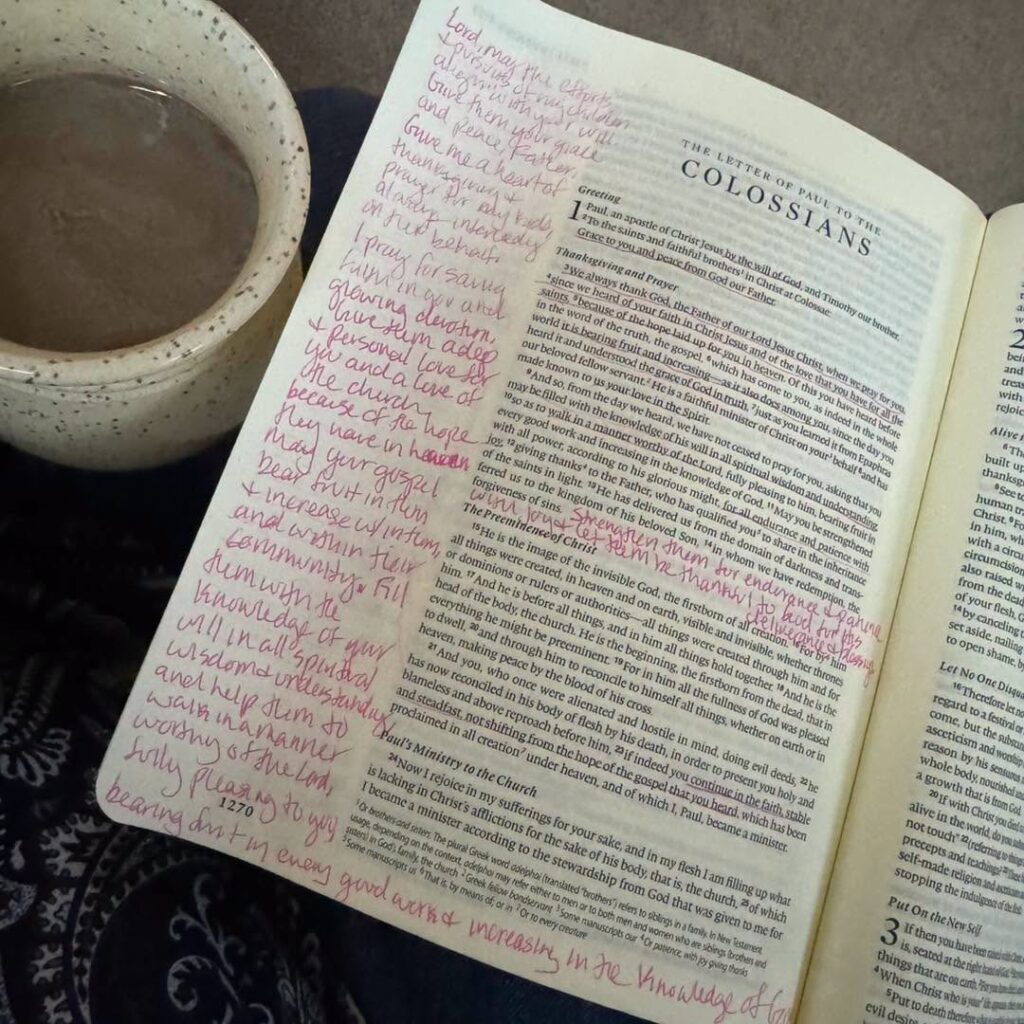
I pray over our homeschool as a whole and over each child individually: their faith, character, relationships, struggles, gifts, and academic needs. I pray for wisdom to recognize what matters most in this season and courage to let go of what doesn’t.
I also pray for myself. I need patience, diligence, humility, endurance, and a heart that is more concerned with faithfulness than appearances or checking things off the checklist.
We can make excellent plans, but the Lord is the One who directs our steps. Beginning in prayer helps put every other preparation in its proper place.
Here are some things you can do to pray over your homeschool:
- Each September I post daily prayers on my FB page and IG. Follow me there and join in!
- Read more about how I pray for our homeschool
- Download free prayer cards to pray over your homeschool
- Download free homeschool prayer calendars
- Buy The Prayerful Homeschooler ebook for deeper insight on our homeschool prayer journey and a guide to walk you through your own
2. Simplify… Again
Somehow, even when I begin with a simple plan, extra things creep in. I can’t help it! I love books and homeschool curriculum. 🙂 A fascinating book here, a new course there, a lovely enrichment idea that surely won’t take much time… Before long, we’re overloaded again.
In the same way my kitchen counter collects clutter, so does our homeschool schedule. So, frequently and throughout the year, I simplify again.
I look at our days and weeks, at our group work, and at each child’s work and ask:
- Is this truly necessary?
- Does it serve one of our current priorities?
- Is there unnecessary overlap?
- Can we combine children or subjects?
- Am I being realistic or setting myself up for a scramble?
- Can this be shortened, looped, saved for later, or dropped altogether?
I have to remember that there are SO many good resources, but we can’t fit them all in every term or even every year. Sometimes it’s just not a good season for that particular activity or resource, and that’s ok. The goal is to do the most important things well, not to try to do everything and be frenzied all year.
3. Revisit the Plan—and Schedule Check-Ins
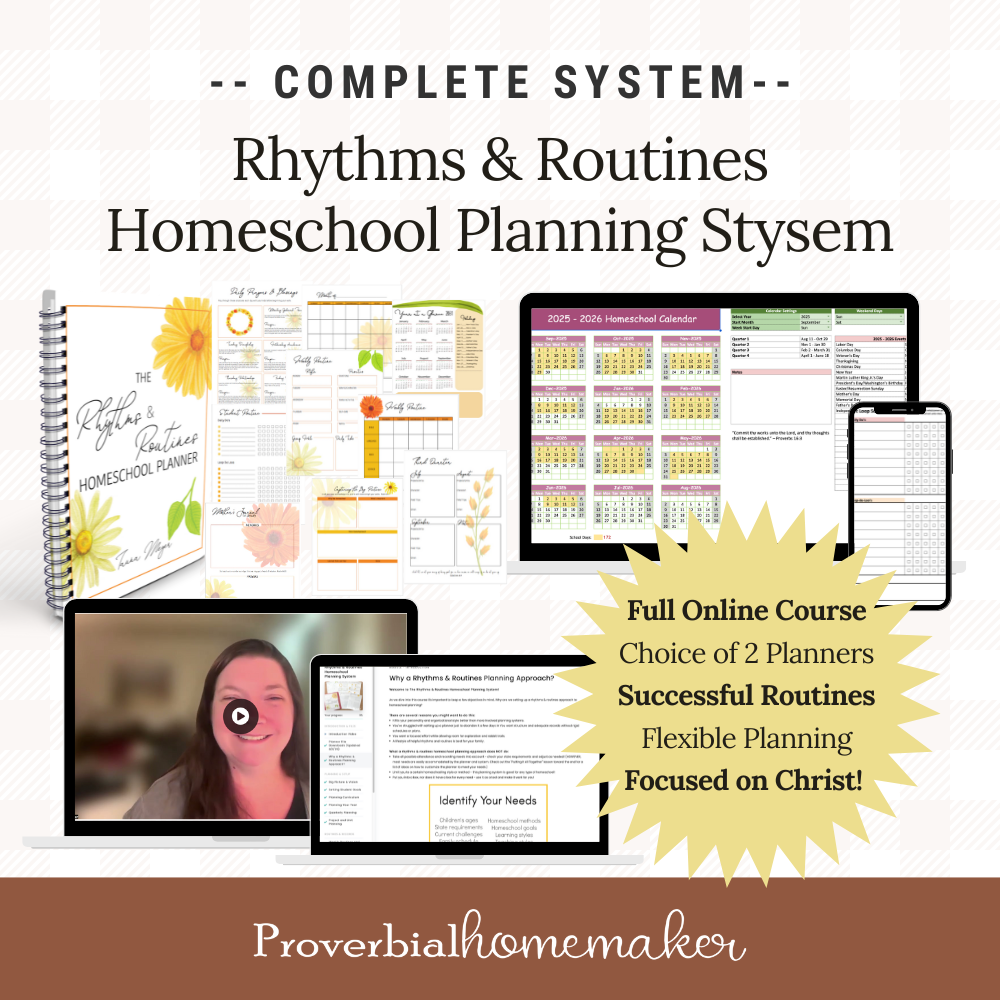
Before the year begins, I revisit our homeschool mission, priorities, and goals. By now I’ve already planned the curriculum for the year (here are our 2026-2027 picks), but I pull up the Rhythms & Routines Homeschool Planner (there’s a printable and a Google Sheets version – I use the latter) and make sure everything’s ready to go.
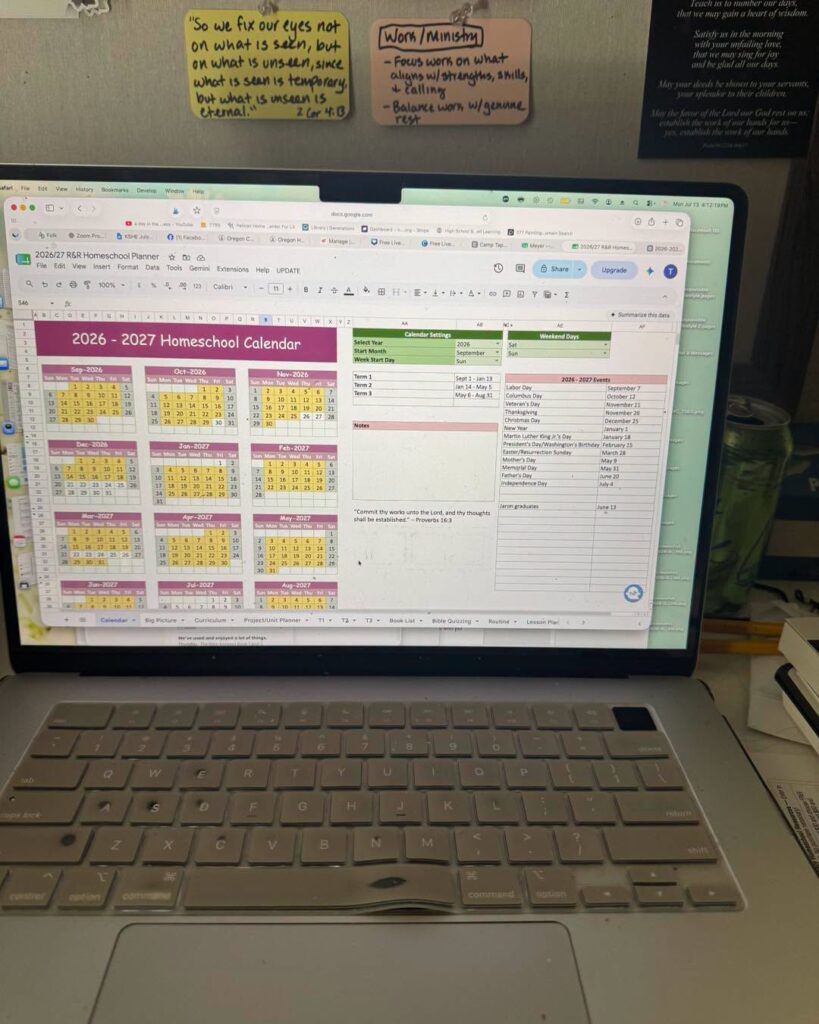
Usually, I’ll need to make a few adjustments before we dive in:
- I consider what each child needs academically, but I also think about discipleship, character, relationships, independence, life skills, and the particular season our family is in.
- I check our blocked-out breaks on the calendar, note where I would like to be at the end of each term with group work and individual skills work (math, writing, etc.), and make sure the first term is roughly sketched out.
- Then I look at our daily and weekly rhythm. Is it still realistic? Does every subject and activity have a place in our routines or does something need adjusted? Where do we need margin?
After revisiting the plan like this, we’re usually ready to go. But I no longer expect the plan I make before school begins to work perfectly all year.
Instead, I put check-in reminders on the calendar—usually after the first few weeks and then at the end of each term. During those check-ins, I can ask:
- Where are we with our curriculum (especially the skills subjects like math, writing, etc.)
- Do we need to speed up, slow down, or keep trucking along?
- What is working well?
- What is consistently causing stress?
- Is the workload reasonable?
- Is anyone ready for more independence or needing more help?
- Are our stated priorities actually showing up in our days?
- What should we change now instead of enduring for three more months?
A plan is a tool, not a master. Regular check-ins give us permission to adjust before small problems become big ones.
4. Make a Not-Doing List
A homeschool plan tells us what we intend to do. A not-doing list protects us from all the things that give us FOMO, make us fall into a comparison trap, or clutter up our days.
This list will look different for every family and every season. Mine might include things such as:
- We are not doing every activity in every curriculum.
- We are not joining every appealing co-op, class, or field trip.
- We are not keeping up with someone else’s homeschool.
- We are not requiring busywork just to fill time.
- We are not finishing a resource simply because we started it.
- We are not sacrificing family peace to maintain an unrealistic plan.
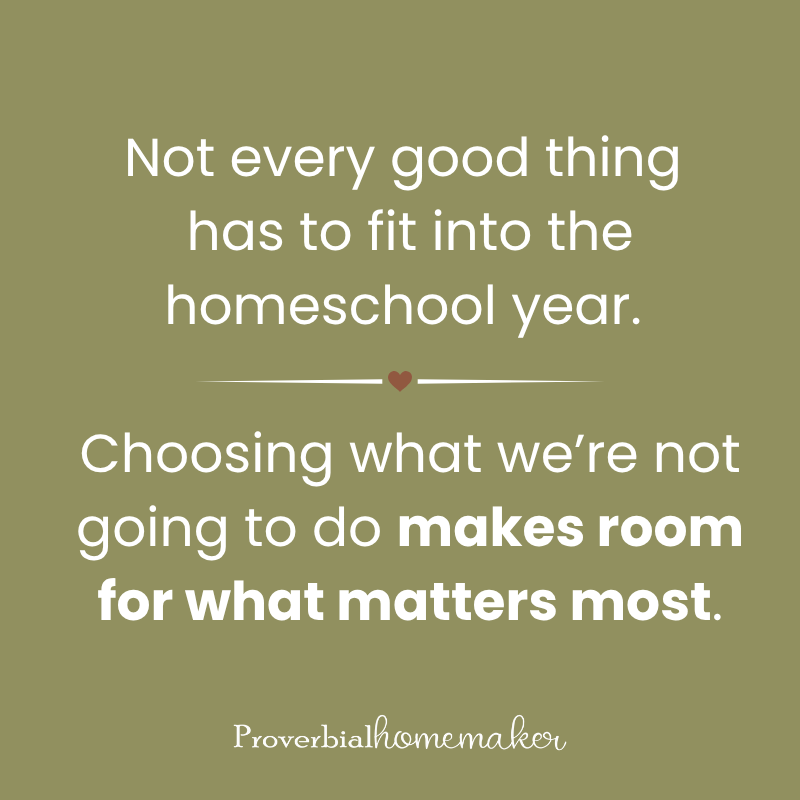
Not every good thing has to fit into the homeschool year. Choosing what we’re not going to do makes room for what matters most.
Your not-doing list may be one of the most freeing homeschool lists you make all year. Here’s what’s on mine this year:
- Not doing group foreign language – we’ve done Spanish the past few years but we’re taking a year off
- Not doing weekly nature studies – some will happen naturally and that will be good
- Not doing every page in our language arts curriculum – we’re layering some resources but I don’t want to waste time on overlap
- Not turning every interest into a formal course – I have to state that because it’s a real temptation lol
- Not doing a morning basket – we’ve done them and they’re great, but this year morning will be Bible every day and we’ll save our enrichment subjects for a loop on Fridays
- Not doing Latin – a long-running not-doing list item for me 😀
- Not delaying group activities if a kid or two is missing – Gone are the days when we’re all together all the time. I just have to face it. Older kids will increasingly have work to do, and our children have branched out into their own interests. These can occasionally interfere with group lesson / read-aloud time, so always waiting until everyone is available is no longer practical.
5. Get the Checklists and Bookshelves Ready
Re-setting our bookshelves and getting the checklists ready is an important task, too.
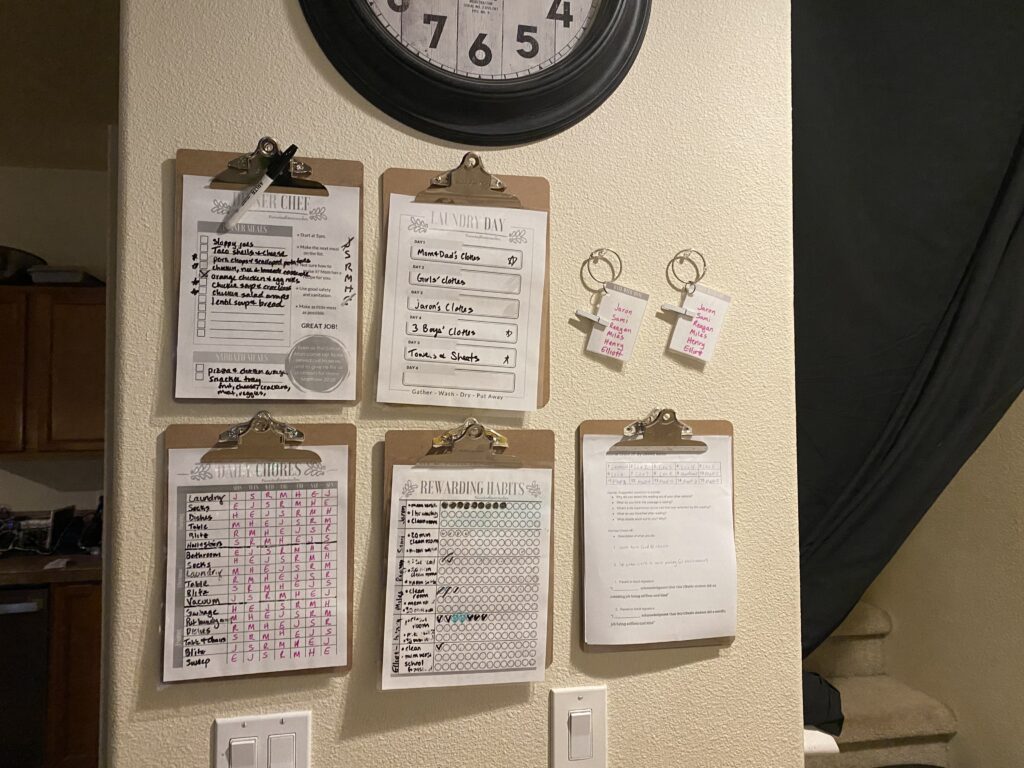
Downstairs, we have shelves near the dining room table where I keep all my materials and group learning materials. Then a tall bookshelf holds some reference books and each child’s daily individual work materials. I make sure only the materials we’re using are on the shelves and tidy and organize them. Everything else goes to the upstairs bookshelves for later use.
Then I refresh our checklists. This is our “command station” wall with all the checklist and loop scheduling tools we use for homeschooling, homemaking, etc. Before the homeschool year starts, I update each checklist so we’re ready to go. (The older kids use their own planners instead of the homeschool checklists on the walls.)
This probably seems fancy but the goal is really just to reduce points of friction as we go through our homeschool week.
6. Stock Up on Essential School Supplies
There are really only a few school supplies we need to stock up on each year:
- Pencils
- Dry erase pens
- Erasable pens
- 3-ring binders
- printer paper
- composition notebooks
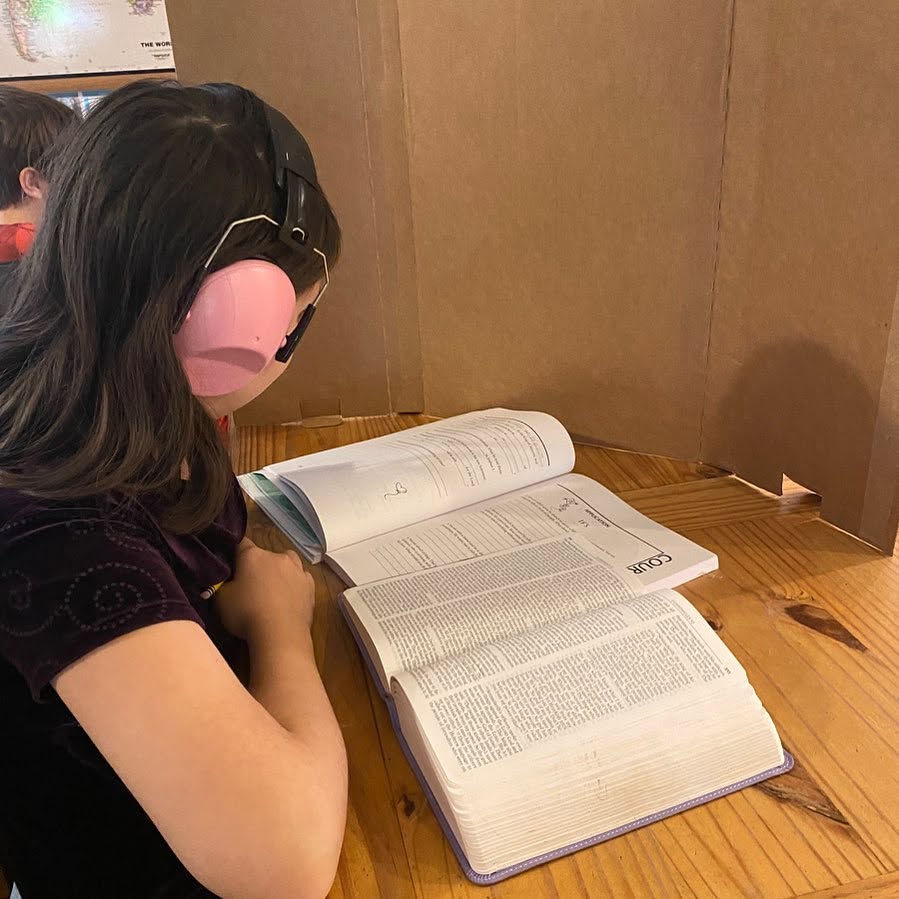
I may also get any needed art supplies or specific class materials. To help the kids focus, we make use of cardboard tri-folds and noise-canceling headphones, too, and sometimes I need to get a few more before the year starts.
You might also be interested in checking out my post on the Homeschool Mom’s Bag of Tricks to see what other interesting items I keep around to make the days go smoother. 🙂
7. Meal Plan and Prep Easy Food
One of the most useful ways I prepare for homeschooling has nothing to do with curriculum.
I prepare food like I’m about to have a baby. Lol!
The first weeks of school require extra attention and energy. We are learning new routines, finding missing books, helping children adjust to expectations, and putting my best-laid-plans to the test. The less friction there is when it comes to mealtime, the better.
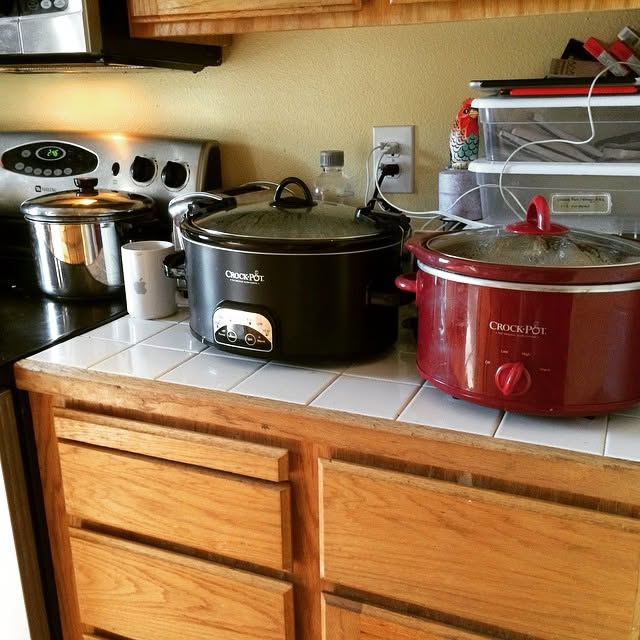
Before we begin, I:
- Update our simple meal rotation.
- Stock easy breakfast, snack, and lunch foods.
- Make sure the children can prepare some options themselves.
- Start tripling dinners to stock a few in the freezer.
- Prep and freeze meats and beans ahead of time.
- Keep a few emergency meals on hand for hard days.
It doesn’t need to be an impressive freezer-cooking marathon. Even a handful of easy dinners and a reliable lunch plan can make the transition back to school noticeably smoother. (I’ve been asked if my meal rotation and freezer meals are on the site yet. Not yet, but I’ll work on that next!)
8. Sketch the First Term—and Plan Only the First Week in Detail
I want enough of a plan to know where we are going, but not so much detail that I spend hours planning lessons we will inevitably need to change.
So I sketch the first term. I note the major books, units, projects, commitments, holidays, and natural stopping points. That gives me direction without requiring me to predict exactly what five different learners will accomplish on a Tuesday eight weeks from now.
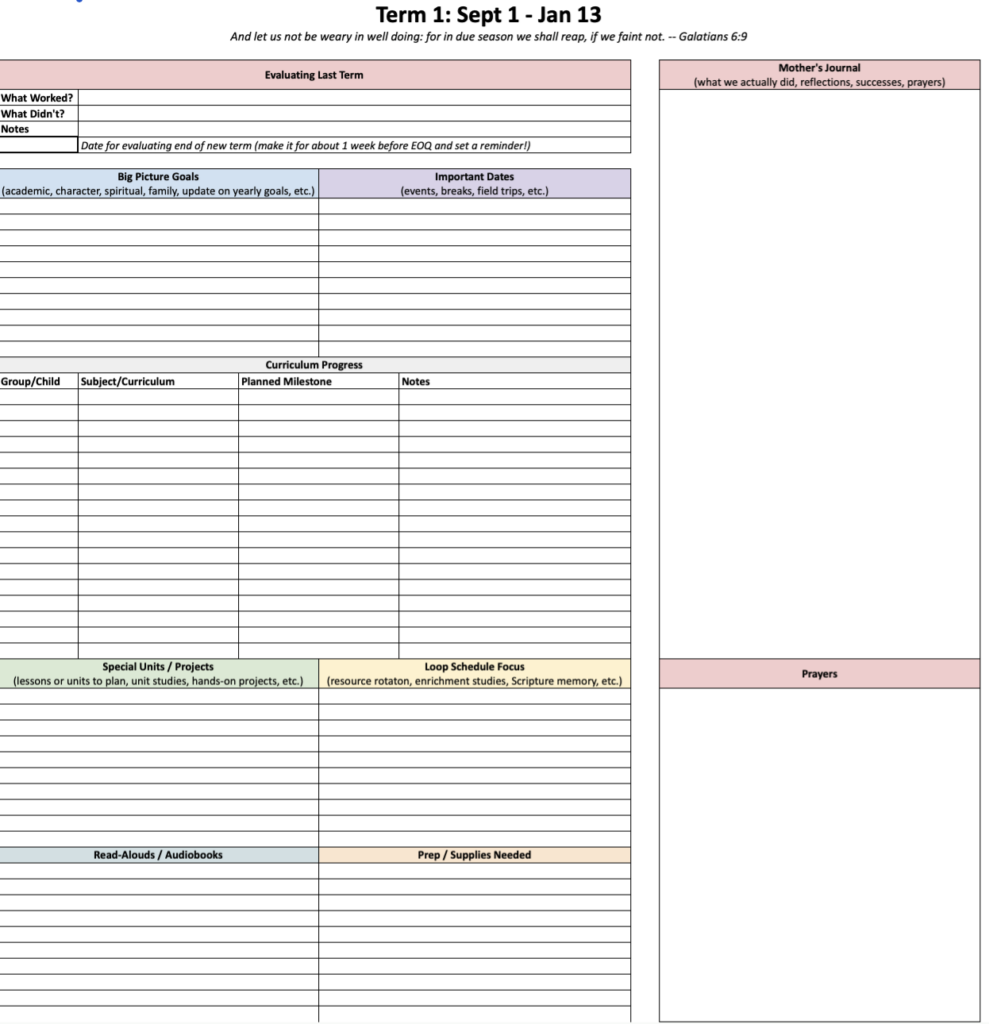
Then I plan the first week in more detail, making it lighter than I think it needs to be.
We usually school year-round, but summer is a lighter load. For the first “back to homeschool week,” we start adding things a few subjects/resources at a time and add others gradually. We practice how to use checklists, where to put completed work, and what our new rhythm feels like. I leave extra time for explanations, interruptions, and adjustment.
The goal is to begin building habits that will serve us for the rest of the year and help us be more consistent.
9. Establish Our Homeschool Family Compact
Each year, we create a simple homeschool family compact. The compact is an agreement about how we want to work and live together during the coming year.
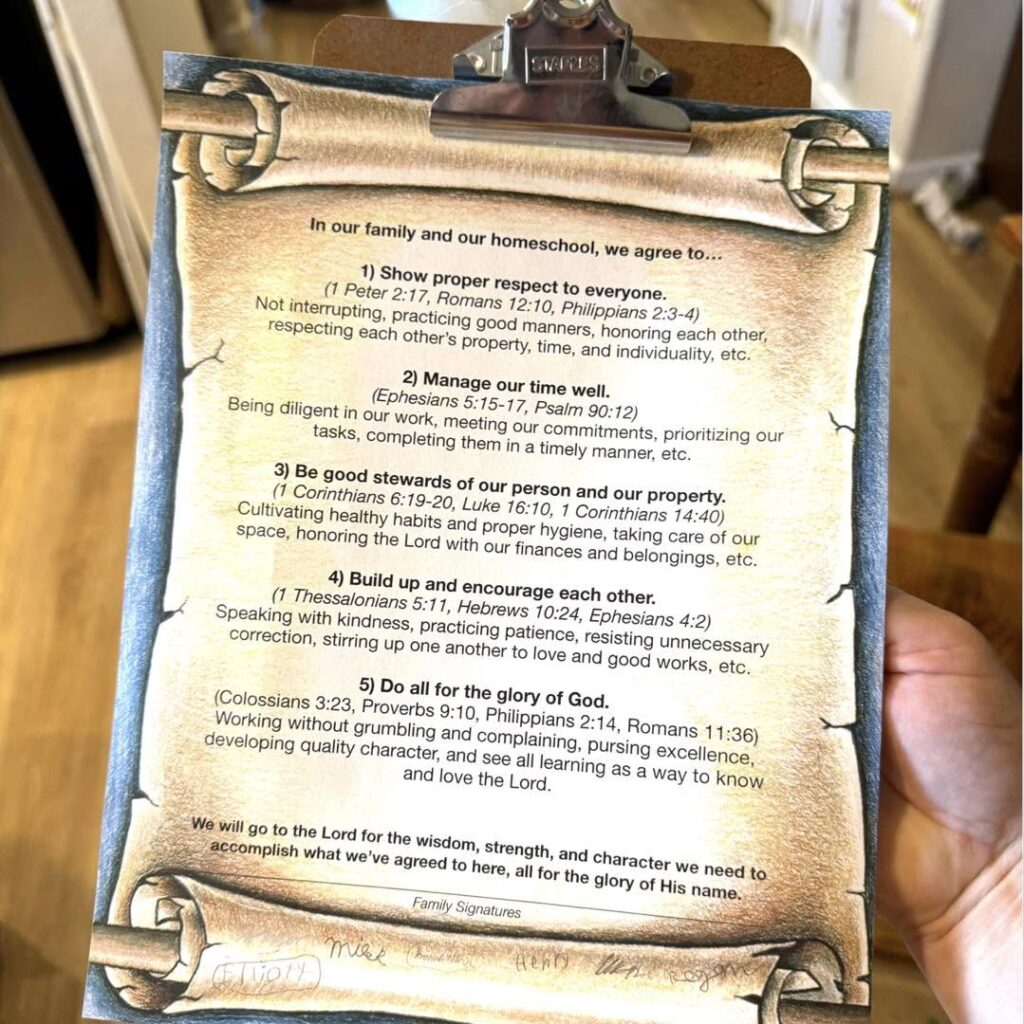
I talk with my kids and ask them what they liked and didn’t like about last year and what they want to see happen this year. And of course I add my own thoughts to that. We talk together about questions such as:
- What is the purpose of our homeschool?
- What worked and didn’t work last year?
- What would help things run smoother?
- What kind of atmosphere do we want in our home?
- How do we want to grow as a family?
Then we turn those ideas into a short set of shared commitments. We might include listening respectfully, working diligently, asking for help appropriately, caring for our materials, encouraging one another, telling the truth, and giving grace.
The compact does not guarantee peaceful school days. But it gives us shared language to return to when we need a reset—and reminds us that our homeschool is something we are building together.
10. Plan a Celebration or Two and Little Ways to Make It Special
Each year we find ways to celebrate the start of a new homeschool year. Typically, this is what we do:
- A family activity like a trip to the beach, a fun get-together with another family, or an amusement park day. We include a “back to school” photo of all the kids together at that event.
- A special breakfast on the first day, with a little gift for each kid (usually a special school-related supply like journals, special pens, etc. or a stash of favorite snacks)
- Binder-decorating day, where we break out the scrapbooking and crafting supplies and decorate our 3-ring binders. These binders hold all their loose papers and printables for the year.
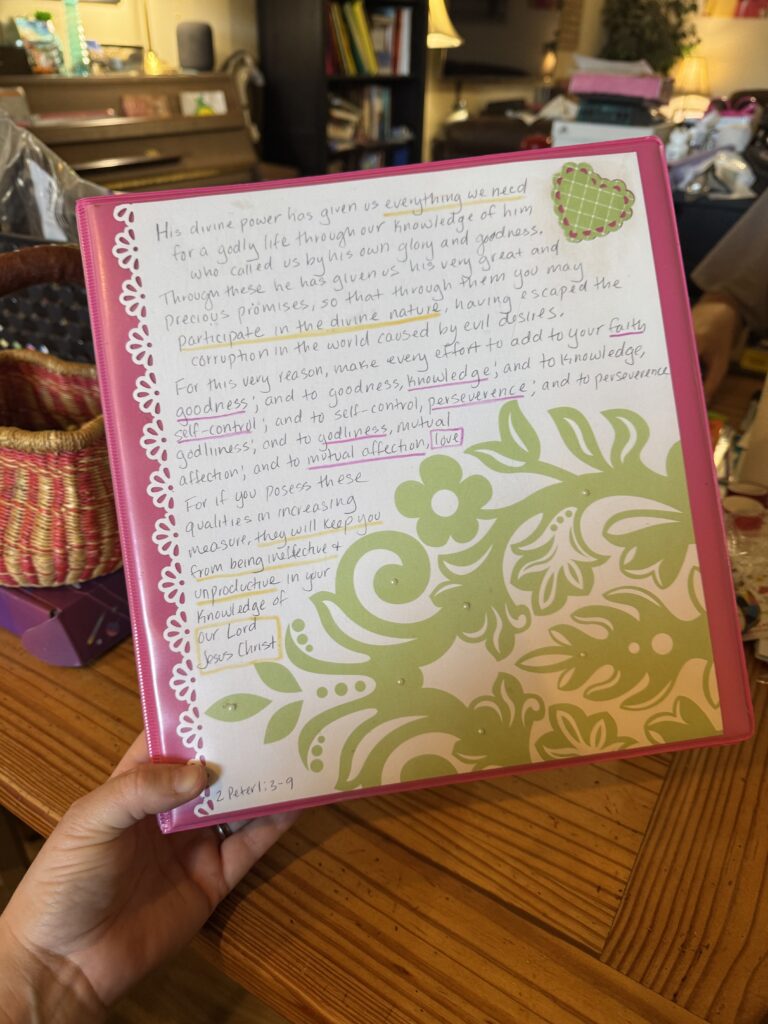
Homeschooling and family discipleship are worth celebrating! These traditions have become meaningful to all of us and are a great way to kick off the year. You can find more back-to-homeschool celebration ideas here.
11. Give a Gift to the Teacher
This one is for you, homeschool mom. Sometimes moms will hit a point with homeschooling where they aren’t excited about it or have burned out a bit. I have had those years! What helps me is making sure to include something in our homeschool plans and activities that brings ME joy.

Another thing I do is giving myself a gift at the beginning of the year. Hey, they give school teachers gifts! Why not give myself a gift that is fun or highly practical for the coming year?
Some ideas:
- A fun homeschool mug or t-shirt
- A new devotional (or this book on praying the Scriptures)
- Your favorite pens
- A book you want to read or listen to
- A small bouquet of flowers for the table
- A coffee-shop gift card
- An Audible subscription
- Lunch out with a friend or two
- Something useful for a hobby you enjoy.
It does not have to be expensive, and it does not have to be educational! But while you are homeschooling the kids, Jesus is homeschooling you, so celebrate!
12. Rest Knowing It Doesn’t Need to Be Perfect
There will always be one more shelf I could organize, lesson I could plan, meal I could freeze, or system I could improve. But the success of our homeschool does not depend on my ability to anticipate every need and prevent every difficult day.
My job is not to create a flawless homeschool. It is to seek the Lord, grow in faithfulness, to love my children and point them to Christ.
The results are up to God! And, friends, the Lord is able. He is faithful. He can take our humble homeschool loaves and fishes and multiply them. He can fill the gaps, produce fruit in our lives, change hearts when needed, and direct our children’s lives for His glory.
The Lord will give us the wisdom and grace we need as we train and disciple our children. Rest in that and enjoy the journey!
Ready or Not, You Can Begin
Preparing well can bring order and peace to the beginning of a homeschool year. But preparation is meant to serve your family, not become one more standard you cannot possibly meet.
If the start of school is near and you have not done all the things, do not panic. Pray. Choose one or two things that would make the greatest difference in your home. Leave the rest for later… or leave it altogether.
Simplify the plan. Celebrate something. Give the teacher a gift. 😉 Perfection not required. Just begin!
Praying that we all have a rich, fruitful, and faithful year!
~ Tauna
You Might Also Like….
Using Rhythms & Routines in our homeschool.