How to Homeschool Preschool and Kindergarten!
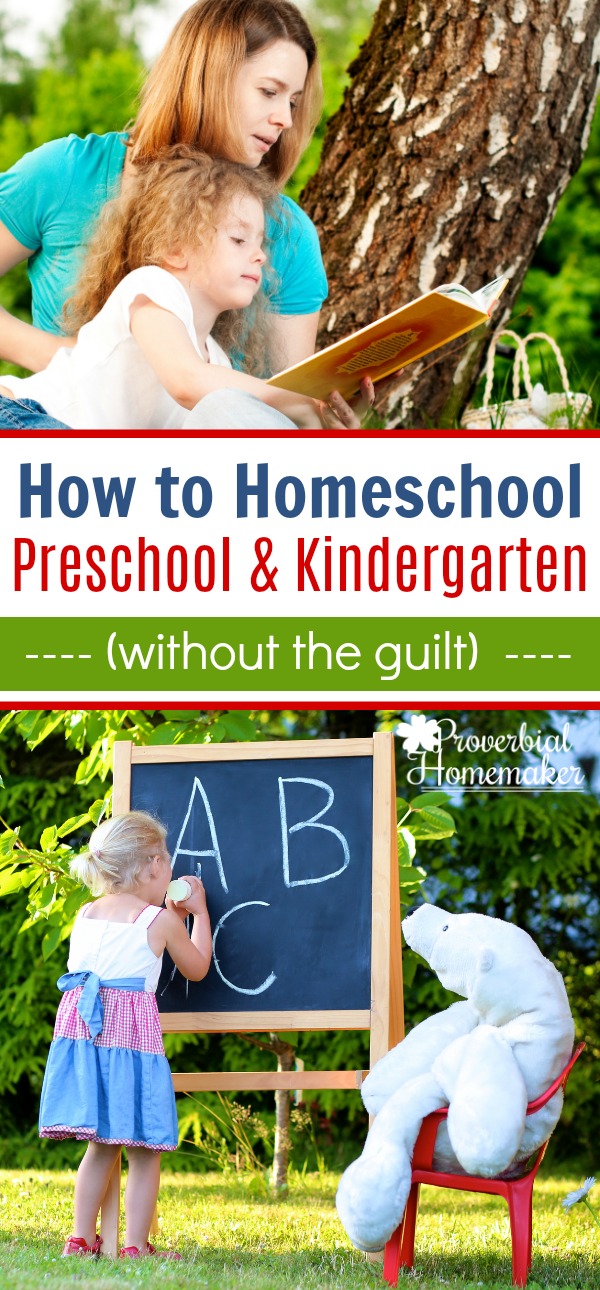
So here you are, a mom with a preschooler or kindergartener and you are venturing into the world of homeschooling, trying to figure out what the best way is to go about teaching your children at these ages. Or perhaps you are wondering what your littlest one should do while the olders are “doing school.”
Invariably, moms getting ready to homeschool preschoolers and kindergarteners all deal with the same questions at some point:
- What curriculum should I use?
- What method is best?
- How do I give them the best start?
- Are we doing too little?
- Are we doing too much?
Sound familiar?
Disclosure: *This post may include affiliate links. As an affiliate, I earn from qualifying purchases.
Read the disclosures and terms for more information.
If you’ve spent any amount of time looking into what and how to teach preschool and Kindergarten, you’ve likely discovered there are a lot of different opinions out there. It looks a little something like this:
Q: How do I teach preschool and kindergarten?
A: Don’t stress it. They’ll learn what they need to. Don’t bog them down with “school” too early.
True.
A: Focus on Christ and the Word of God. Scripture memory and character are all they need at this stage!
So true.
A: Read, read, read! Have frequent read-aloud times, use audio books, build your library, and expand your own reading!
True.
A: Teach them life skills and basic reading and math.
True.
A: Focus on exposing them to great learning experiences and helping them love to learn.
True.
A: They love to “do school!” And, be honest. So do you. Pick a curriculum and use it!
Also true.
A: Pick a curriculum and use this phase as a time to develop routines and your own self-discipline while exploring things like homeschool methods, learning styles, etc.
True.
A: Well, this is the best time for kids to learn a foreign language, you know…
All true.
Sigh. Make it stop!
So What Should You Do?
Homeschooling opinions are a lot like parenting opinions. No matter what you choose to do, someone out there will think it’s the best thing ever and someone out there will think it’s the worst thing ever. So don’t let yourself be sidelined by it when it happens!
Do what you want. While it can be inspiring and useful to find out what others are doing and glean what is helpful, don’t let it stress you out! Don’t allow yourself to dwell in worry about all the opinions or articles that say you should be doing this or doing that, or doing nothing at all.
Three Steps to Getting Started
Here are the three things I suggest you focus on above all else. From experience, they’re essential.
1) Pray for Wisdom. There’s no homeschooling tool more effective, more reliable, or more affordable than PRAYER. Learn now to go first to the Lord in prayer and He will guide you. Ask for help in finding the approach that is right for you, your kids, your current situation.
2) Don’t Get Stuck. It’s a good thing to seek advice, do research, and find out what more experienced homeschool moms recommend. However, don’t get stuck in analysis paralysis! Glean the useful tidbits and be sure to move on to #3.
3) You Do You. Only you as the parent are the best one to determine what your child needs at each stage. Pick an approach that seems reasonable and just try it out, adjusting as needed based on what you observe about your child’s developmental readiness, needs, and family dynamic.

My Changing Approach to Homeschooling the Early Years
I have tried a lot of different things in these years of homeschooling, and I still have 3 out of 6 kids in what I’d consider the early education stages. I am always learning more about how they learn and how to best teach them.
Here’s what our homeschool years have looked like for preschool and kindergarten. Note that I don’t regret ANY of them.
- Formal Pre-K / Kinder Curriculum: I spent time and money on our firstborn doing formal preschool. I don’t regret it! We both had fun! He is not in therapy because of it and still loves learning.
- Delayed Academics: Over time I have done less and less and less until about 1st or 2nd grade, focusing instead on character, play-based learning, and habits. I don’t regret this either! It is a fruitful use of our time and they aren’t behind at all.
- One Room Schoolhouse: As a large family mom, we do a one-room schoolhouse style for subjects like history, Bible, science, art, music, read alouds, etc. so that they all benefit at their own level. We LOVE this approach and they learn so much by tagging along. The olders take the time to teach the youngers basic things, too, which is a blessing all around.
- Fun “School” Activities: My pre-k and kinder kids still enjoy “doing school” sometimes so we use fun workbooks, worksheets, activities, and apps.
- Introducing the 3 R’s: When our kids start “reading” books and show readiness, we begin teaching reading. When they begin “writing notes” and leaving them all over the house (with their various scribbles), we begin teaching handwriting. Somewhere around the same time we start living math activities (games, counting, etc.) Sometimes we use apps. It’s not based on their age, but their readiness based on our observations and usually is around 4-7 depending on the kid. In the end, the all catch up to each other so we don’t stress too much about when they start.
What is the Best Pre-K and Kindergarten Curriculum?
Well… I hate to say it but there is no “best” preschool or kindergarten curriculum. It is a blessing that we have so many options to choose from these days, but it can also be overwhelming. There are several great ones to choose from and a lot of times it comes down to things like preference (for you and your child), learning style, and budget.
You already have a peek into what we do for our own kids at that stage, so as you can imagine, we don’t rely much on curriculum. Sometime I’ll write about the various resources we have used (it’s a short list), but for now I wanted to share one in particular because it’s become the first place I go to for fun “I want to do school” activities as well as lessons for when our kids are beginning to show readiness.
The Crafty Classroom – Educational Resources for the Early Years
We have been using The Crafty Classroom more and more in our homeschool. The materials are very well done, teach the subjects effectively, my kids always enjoy them, and I find them easy to use. That’s pretty much a rockstar curriculum description in my book!
Here are a few of the offerings that I love from The Crafty Classroom, some of them we’ve already been using, and some from our wish list!
- Bible ABC Curriculum Notebook –
- Maze Writer –
- St. Patrick’s Day Experiments –
- R.E.A.D. – Kindergarten Reading and Language Arts curriculum
- Interactive Math –
- U.S.A Geography –
- Writing Curriculum – from Kindergarten to 3rd grade
- Much more!
NEW Sight Word Curriculum
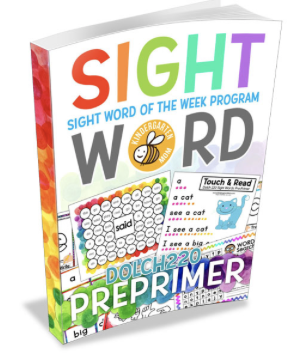
The latest offering from The Crafty Classroom is the new Sight Word of the Week curriculum! This covers 40 sight words for preschool and kindergarten. Each week goes through one sight word with engaging worksheets, activities, games, and hands-on resources. I’m planning on using this with my current kinder/1st grader starting next month, but my assistant Jamie has already been using it and wanted to share her experiences so far with you! Click here or the curriculum image below to check out that review and get some details on the new curriculum.
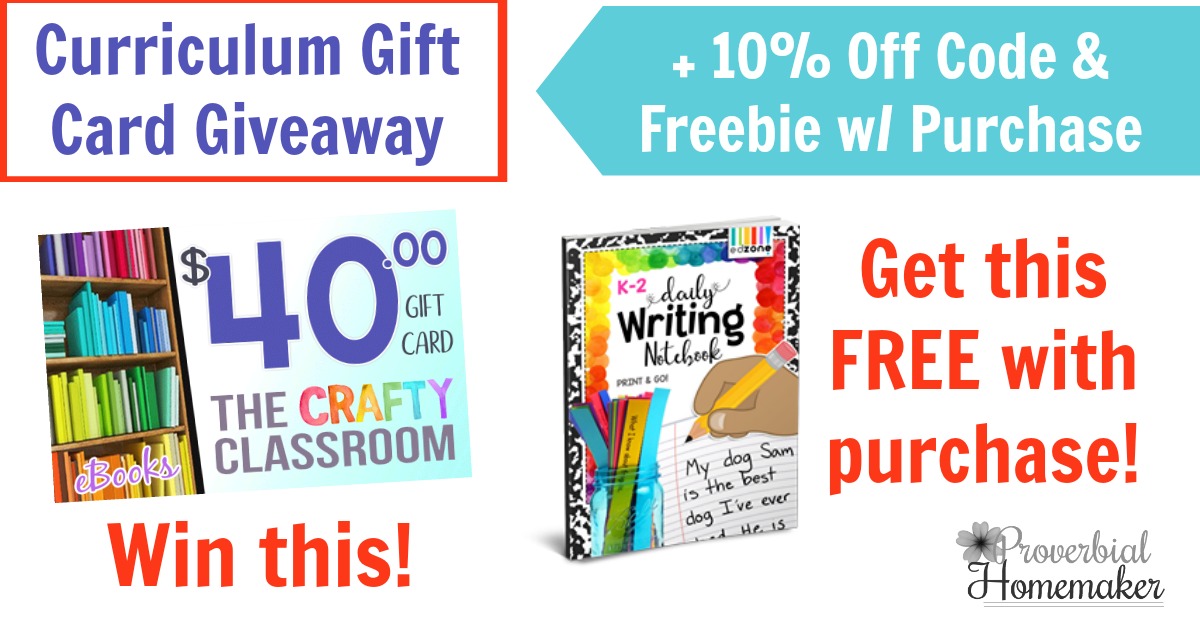
{Giveaway, Freebie, & Coupon Code!} Win $40 at The Crafty Classroom!
I reached out to the owner of The Crafty Classroom to do some fantastic partnerships to bless YOU this month! Check this out:
- Get 10% off ANY ORDER at The Crafty Classroom by using code MARCH10
- Get the K-2 Daily Writing Notebook (reg. $5) FREE on any order over $25 by using code WRITEFREE
- The deals can be combined with each other but not other offers, and both deals expire after March 22, 2018